American illustration
Home for Thanksgiving
Norman Rockwell, 1945
Home for Thanksgiving is Norman Rockwell's painting of a young airman peeling potatoes with his mother, made for the Saturday Evening Post cover of November 24, 1945, the first Thanksgiving after World War II. It is in a private collection.
- Artist
- Norman Rockwell
- Date
- 1945
- Medium
- Oil on canvas
- Collection
- Private collection
- Movement
- American illustration
Home for Thanksgiving is a painting by Norman Rockwell made for the cover of The Saturday Evening Post of November 24, 1945. It was the first Thanksgiving after the end of World War II, and Rockwell's image of a soldier back in his mother's kitchen spoke directly to the millions of families waiting for, or welcoming back, their sons. The painting is in a private collection.
What you are looking at
Two people sit side by side on wooden kitchen chairs, peeling potatoes. On the left is an older woman with gray hair pinned back, in a blue-green flowered dress and a long white apron, a wooden bowl in her lap. She looks sideways at her son with a small, private smile. On the right sits a young man in an olive-drab army uniform, a round Army Air Forces patch on his shoulder and a row of ribbons over his pocket. He concentrates on the potato in his hands, his head bowed, smiling slightly.
At their feet stands a metal pan of peeled potatoes. Around them is everything a Thanksgiving dinner needs: a big orange pumpkin on the floor at left, a basket of apples, a dish of cranberries, and behind them a table with a red-checked cloth piled with squash, oranges, celery and pots. The wall is papered in a green diamond pattern.
The joke, which Post readers would have recognized, is that peeling potatoes was a classic army chore, "KP" duty. The young man has come home from the war and is doing the same job in his mother's kitchen, this time gladly.
How it was made
Rockwell worked from staged photographs of local models, which allowed the precise detail of the fabric, the worn chair seats and the potato peelings. He kept the composition simple: two figures turned slightly toward each other, framed by food, with no one looking at the viewer. The warmth comes from the colors, the oranges, reds and greens of the harvest, and from the mother's glance.
Later history
According to accounts of the painting's history, it was given by a local priest to an American Legion post in 1959 without its owners realizing who had painted it, and it was only identified and valued in the early 1980s with the help of the Norman Rockwell Museum. It was later sold at auction in 2021. We have not independently confirmed the details or the sale price.
Why it matters
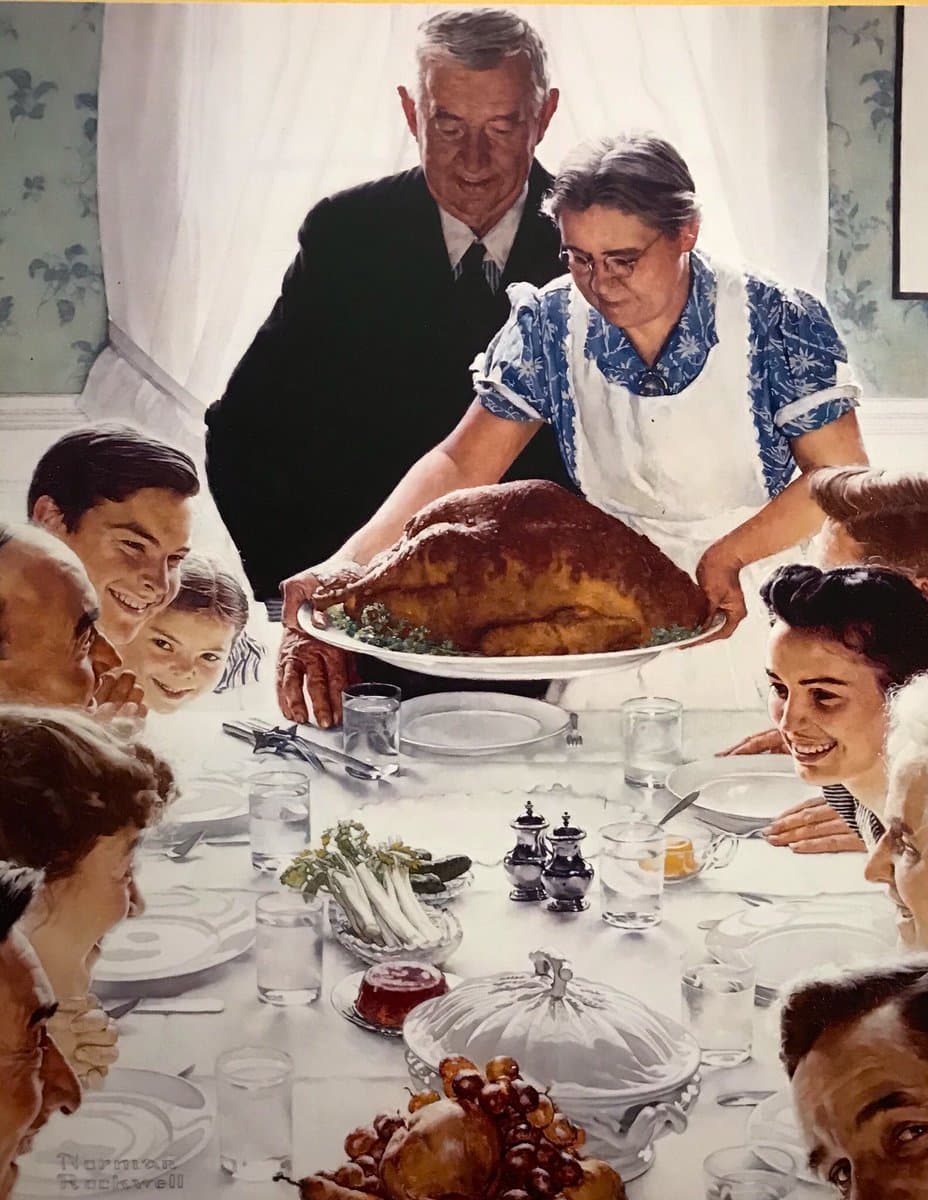
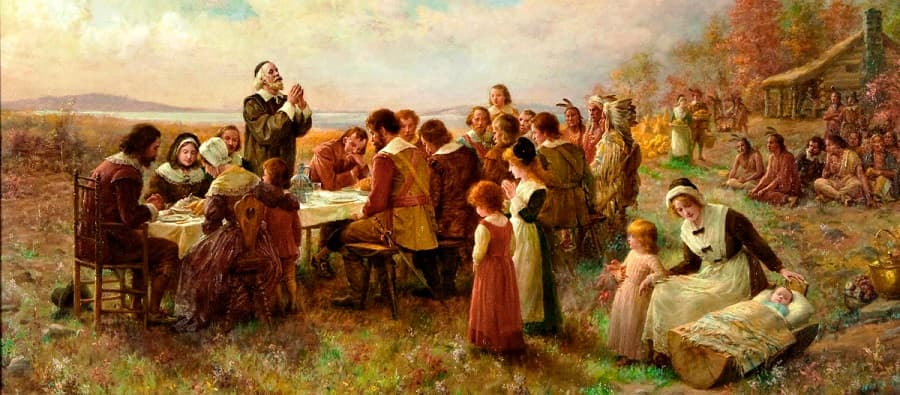
Rockwell's Post covers during and after the war, including Freedom from Want, helped shape how Americans pictured home, family and national belonging. Home for Thanksgiving is one of his most tender images of return, and it treats an ordinary chore as the sign that life has resumed. See also The First Thanksgiving and the Norman Rockwell page.
Questions & answers
When was Home for Thanksgiving published?
It appeared on the cover of The Saturday Evening Post on November 24, 1945, the first Thanksgiving after the end of World War II. The image of a returning airman helping his mother in the kitchen spoke to many families welcoming servicemen home that autumn.
What is happening in Rockwell's Home for Thanksgiving?
A young soldier in Army Air Forces uniform and his mother sit side by side peeling potatoes for Thanksgiving dinner. Peeling potatoes was a classic army kitchen chore, so the scene shows him back home doing the same task, but now with affection and relief.
Where is the original Home for Thanksgiving painting?
The original painting is in a private collection. Accounts say it spent years at an American Legion post before being identified as a Rockwell in the early 1980s, and it was later sold at auction in 2021. The current owner has not been made public.
More by the artist
Norman Rockwell
Kindred works
You may also study
The First Thanksgiving at Plymouth
Jennie Augusta Brownscombe · 1914
The Thankful Poor
Henry Ossawa Tanner · 1894

Saturn Devouring His Son
Francisco Goya · c. 1819–1823

Woman with a Parasol – Madame Monet and Her Son
Claude Monet · 1875
Las Meninas
Diego Velázquez · 1656
The School of Athens
Raphael · 1509–1511
Liberty Leading the People
Eugène Delacroix · 1830
Girl with a Pearl Earring
Johannes Vermeer · c. 1665