Academic realism
The Telegram
Luise Max-Ehrler, 1894
The Telegram is an 1894 painting by Luise Max-Ehrler (Luisa Max-Ehrlerová) in the National Gallery Prague. A woman in white, surrounded by letters and a telegram, holds a small revolver in her lap: bad news has arrived, and the gun hints at what she may do next.
- Artist
- Luise Max-Ehrler
- Date
- 1894
- Medium
- Oil on canvas
- Dimensions
- 97 × 92 cm
- Collection
- National Gallery Prague, Prague, Czech Republic
- Movement
- Academic realism
The Telegram (Telegram) is an oil painting of 1894 by Luise Max-Ehrler (1850–1920), a painter born in Florence who worked in Prague, Vienna and Munich, and who is known in Czech as Luisa Max-Ehrlerová. It measures 97 × 92 cm and belongs to the National Gallery Prague, which bought it in 1895 from the exhibition of the Krasoumná jednota (Fine Arts Union) at the Rudolfinum.
What you're looking at
The image on this page is a detail, and it shows the painting's most unsettling element. A woman's hand, pale and soft, rests in the lap of a creamy white dress with lace cuffs. On her ring finger she wears a gold ring set with pearls or opals. Her fingers are curled loosely around a small, nickel-plated revolver, its barrel pointing toward the left, its cylinder catching a dull gleam. Beside her knee runs the edge of an ornate brown-and-gold upholstered chair or desk, and at the upper left corner a scrap of white paper is just visible.
In the full composition the woman sits at an ornate writing desk among letters and a telegram, the document that gives the picture its title. Listings of the painting describe a woman in distress over the news she has received. The revolver, held almost casually, turns a domestic scene into a narrative of crisis.
What makes the detail effective is its restraint. Nothing is dramatic: the hand is relaxed, the dress immaculate, the ring a small sign of a relationship or a marriage. The danger lies entirely in the object it holds.
Meaning
In the 1890s a telegram meant urgent news, very often of a death, a betrayal or a financial ruin. Max-Ehrler leaves the message unread by us, so we must infer it from the woman's response. The revolver suggests that she is contemplating suicide, a subject that late nineteenth-century genre painting approached through exactly this kind of quiet, suspended moment rather than through the act itself.
The picture also belongs to a long tradition of paintings of women reading letters, reaching back to Vermeer, in which a private message carries an emotional charge the viewer can only guess at.
The artist
Luise Ehrler von Erlenburg was born in Florence in 1850 to an Austrian officer's family and grew up largely in Italian garrison towns before the family settled in Prague. She studied with Emil Lauffer in Prague and with Joseph Flüggen in Munich, and in 1877 she married the painter Heinrich Max, brother of the Symbolist Gabriel von Max. In Vienna the couple moved in the circle of Hans Makart; she painted genre scenes, history subjects and still lifes, and Emperor Franz Joseph bought several of her works. Like her brothers-in-law, she often painted women in tense, emotionally charged situations. She later lived in Munich and then at Aigen near Salzburg, where she died in 1920.
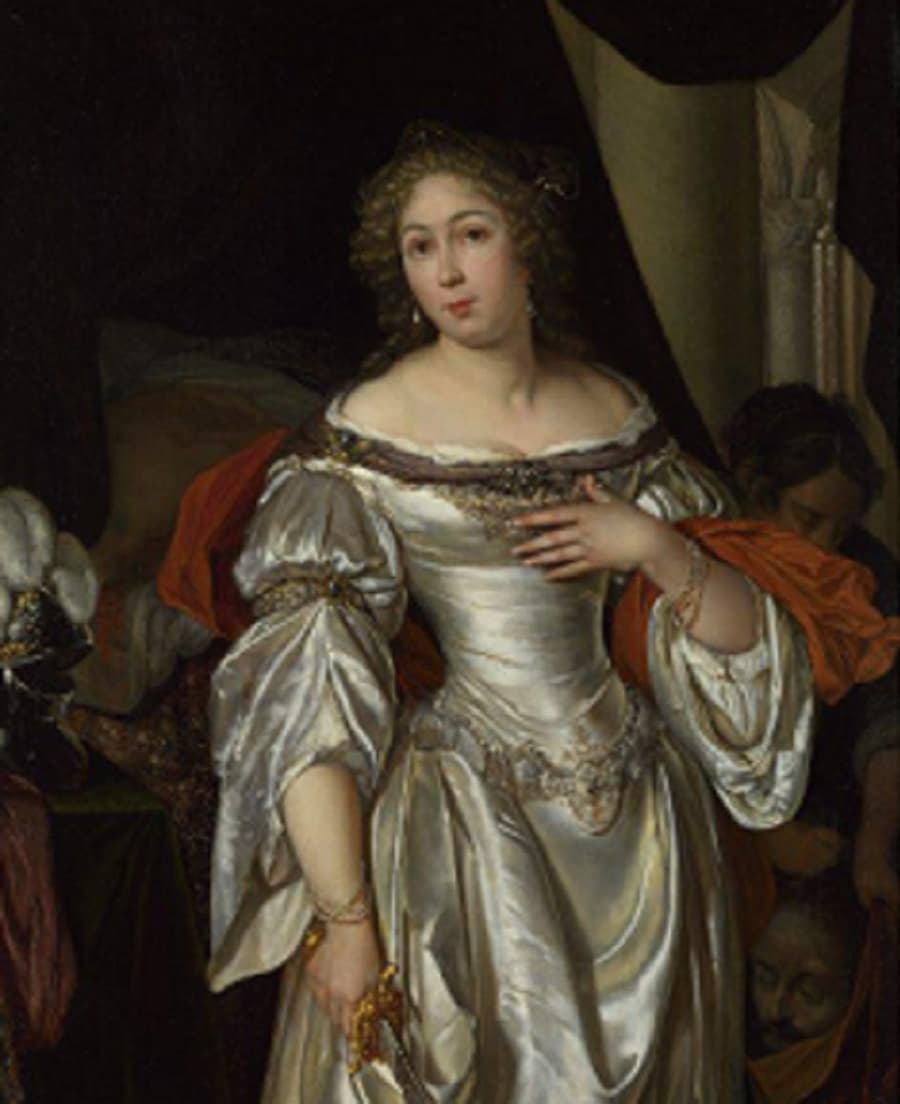
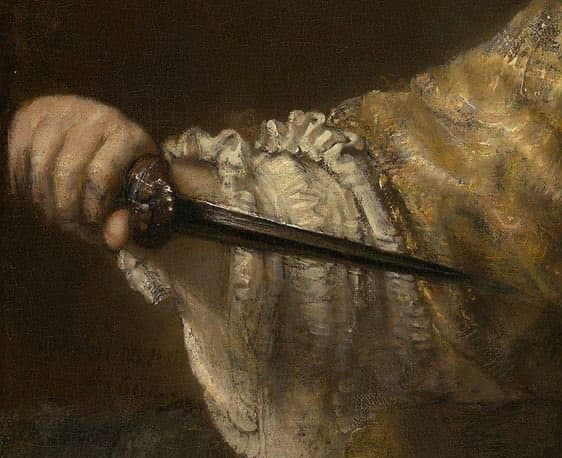
For other women caught at a moment of decision, see Judith by Eglon van der Neer and The Suicide of Lucretia by Rembrandt, and the wider survey in Famous Paintings of Women.
Questions & answers
Who painted The Telegram?
The Telegram (1894) is by Luise Max-Ehrler, known in Czech as Luisa Max-Ehrlerová (1850–1920). Born in Florence to an Austrian officer's family, she trained in Prague and Munich, married the painter Heinrich Max, and worked in Prague, Vienna and Munich, painting genre scenes, history subjects and still lifes.
Where is The Telegram by Max-Ehrler?
It is in the National Gallery Prague. The gallery acquired it in 1895 from the exhibition of the Krasoumná jednota (Fine Arts Union) held at the Rudolfinum in Prague. The canvas measures 97 × 92 cm. At the time, works by women were rarely shown at Prague exhibitions.
What does The Telegram painting mean?
A woman in white sits among letters and a telegram, holding a small revolver in her lap. The telegram has brought bad news, and the gun suggests she is contemplating suicide. The painter leaves the message unread, so the viewer must imagine what has happened.
Kindred works
You may also study
Judith
Eglon van der Neer · c. 1678
Lucretia
Rembrandt · 1664

Judith with the Head of Holofernes
Fede Galizia · 1596
Premier Deuil
William-Adolphe Bouguereau · 1888
Lady in the Garden
Abbott Fuller Graves

Venus de Milo
Alexandros of Antioch · c. 150–125 BC

The Scream
Edvard Munch · 1893
The Thinker
Auguste Rodin · Modeled 1880–82; enlarged 1902–03; this cast 1904