Contemporary ceramics
Canary 3
Kate MacDowell, 2010
Canary 3 is a white porcelain sculpture by the American artist Kate MacDowell of a pair of human lungs with cavities holding canaries perched on branches, a warning about air pollution and environmental harm.
- Artist
- Kate MacDowell
- Date
- 2010
- Medium
- Hand-built porcelain
- Movement
- Contemporary ceramics
Canary 3 is a hand-built porcelain sculpture by the Portland, Oregon, artist Kate MacDowell. It represents a pair of human lungs, complete with trachea, whose interiors have been opened up to reveal small canaries perched on twigs inside. The catalogue records the date as 2010. MacDowell is known for porcelain works that fuse human anatomy with animals and plants to make points about humanity's damage to the natural world.
What you are looking at
Seen from the front, the sculpture is a recognizable pair of lungs in unglazed white porcelain. The surface is covered with a fine network of polygonal cells, like the texture of real lung tissue or of leather. A ribbed windpipe rises between the two lobes at the top.
Each lobe has a large, irregular opening cut into it, its edge thickened and rippled. Inside, as if in two small caves or birdcages, sit canaries: three or four in each lung, perched on thin branches that grow from the inner walls. They are modeled in careful detail, with folded wings, short beaks and small round eyes. Some look out, some turn away. The inner walls are carved with a honeycomb pattern suggesting the alveoli, the tiny air sacs of the lung.
Everything is the same matte white. Without color, the birds and the organ become one material, and the eye has to work to separate them.
The canary in the coal mine
The title explains the image. From the late nineteenth century until the 1980s, miners in Britain and elsewhere took caged canaries underground. The birds were more sensitive than people to carbon monoxide and other gases; if a canary showed distress or died, the miners knew to get out. "Canary in the coal mine" became shorthand for an early warning of danger.
MacDowell places the canaries inside the lungs themselves. The body becomes the mine, and the birds become the warning signal of what we breathe. The work points to air pollution and its effects on both people and animals, and suggests that human health and the health of other species cannot be separated.
How it was made
MacDowell hand-builds her sculptures in porcelain rather than casting them, carving and modeling fine details before firing. She has said she was drawn to porcelain partly for its translucence and its associations with fragility and preciousness. That fragility mirrors the subject: the thin walls of the lungs, like the birds, could break.
Where to see it
The current owner of Canary 3 is not publicly recorded. For more of MacDowell's work in the catalogue, see Solastalgia; for other works linking the body and nature, see Flower Figures Nº02 and Thrive.
Questions & answers
Who made Canary 3?
Canary 3 was made by Kate MacDowell, an American sculptor based in Portland, Oregon. She works in hand-built porcelain and is known for pieces that merge human anatomy with animals and plants to comment on humanity's impact on the environment.
What does Canary 3 mean?
The canaries refer to the birds miners took underground to warn them of poisonous gas. Placing them inside a pair of human lungs turns the body into the mine and the birds into a warning about the air we breathe, and about pollution harming people and animals alike.
What is Canary 3 made of?
It is made of white porcelain, hand-built and carved rather than cast. MacDowell leaves the porcelain unglazed and white, so the lungs, branches and birds share the same pale, fragile material, which emphasizes how delicate both bodies and ecosystems are.
Why were canaries used in coal mines?
Canaries react quickly to carbon monoxide and other dangerous gases, showing distress well before humans feel any effects. Miners carried them underground in cages as an early warning system, a practice that continued in Britain until the 1980s. Electronic detectors then replaced them.
More by the artist
Kate MacDowell
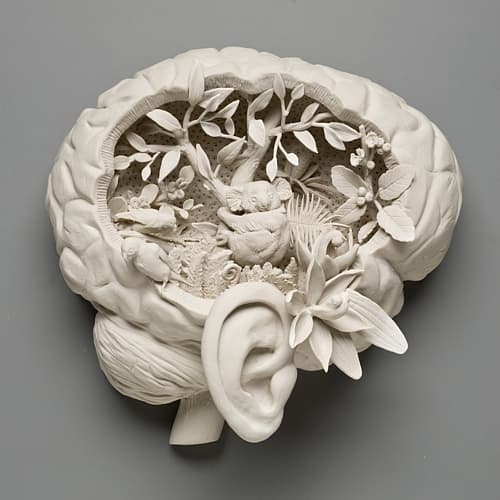
Kindred works
You may also study
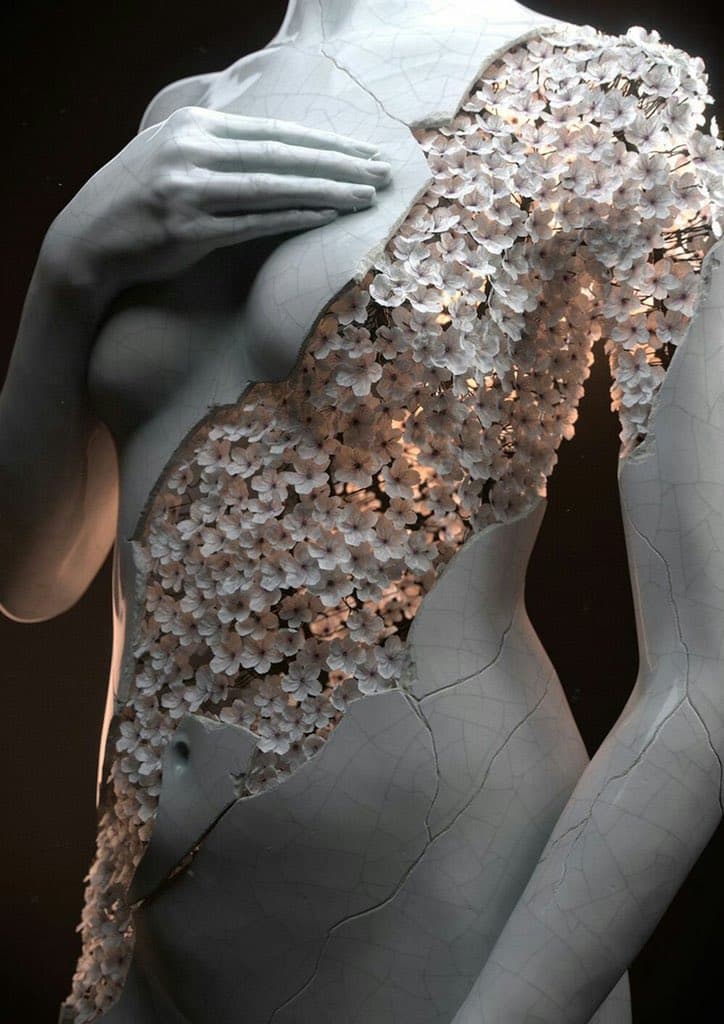
Flower Figures Nº02
Jean-Michel Bihorel · 2016
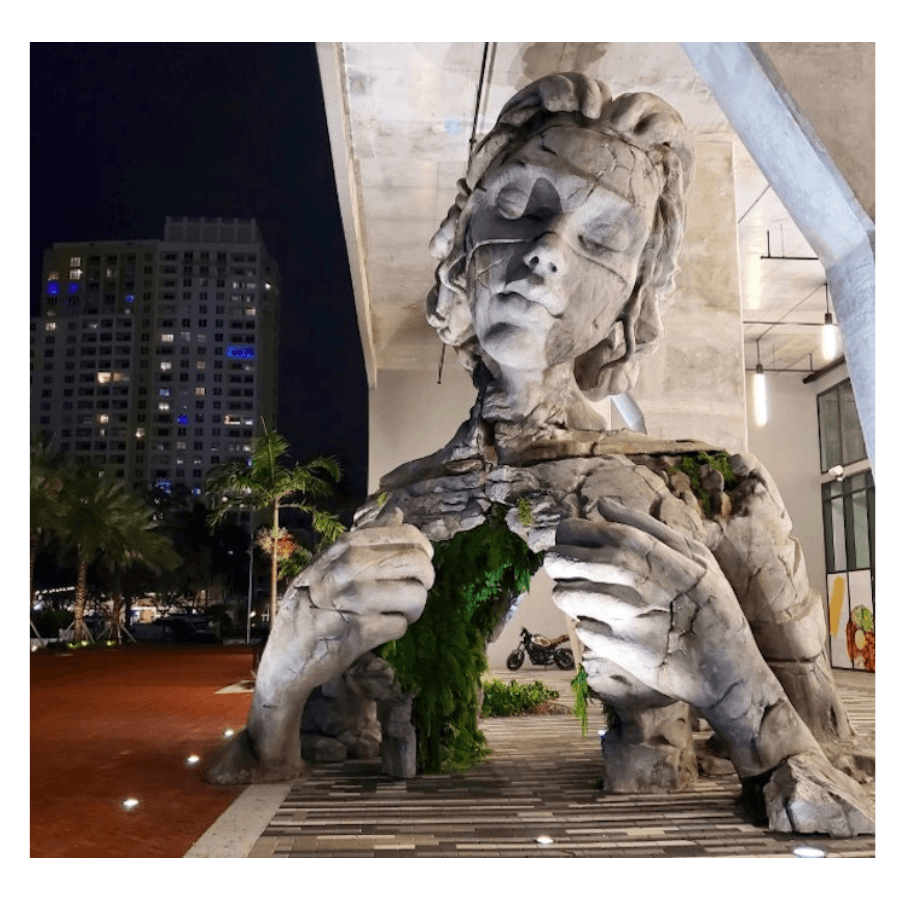
Thrive
Daniel Popper · 2020
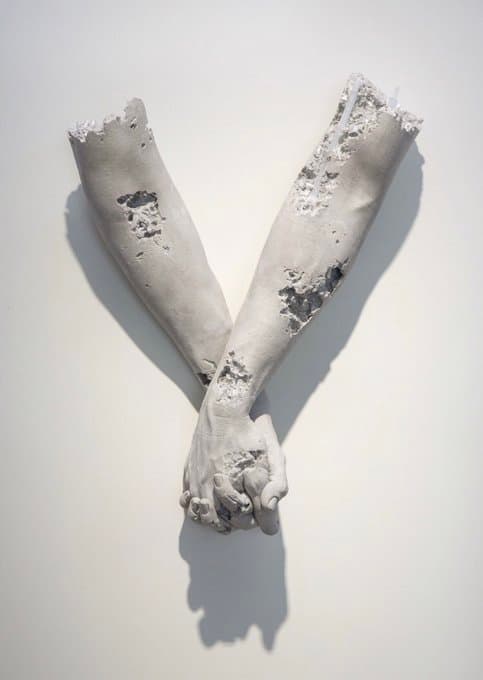
Holding Hands
Daniel Arsham · 2015

Winter Sleep
Jean-Michel Bihorel · 2020

Bridge over a Pond of Water Lilies
Claude Monet · 1899

The Scream
Edvard Munch · 1893

Saturn Devouring His Son
Francisco Goya · c. 1819–1823

Ophelia
John Everett Millais · 1851–52