Contemporary fine art photography
Revenge
Iness Rychlik
Revenge is a staged self-portrait photograph by the Polish-born photographer and filmmaker Iness Rychlik, showing a woman's torso in a slipping cream negligee, one ringed hand stained red. It belongs to her series of ambiguous, darkly feminine self-portraits.
- Artist
- Iness Rychlik
- Medium
- Photograph
- Collection
- Collection of the artist
- Movement
- Contemporary fine art photography
What you are looking at
The camera crops the body tightly, from the collarbones to the thighs, so there is no face and no eyes to read. A woman sits against a deep bottle-green backdrop in a sheer cream negligee edged with lace, the gown slipping off both shoulders and pooling in soft folds across her lap. Her right hand is pressed flat over her breast; her left hand grips her own right wrist, as if holding it there or holding it back.
The detail that gives the picture its title is on that right hand. Several ornate antique rings crowd the fingers, and the knuckles and fingertips are smeared with red. Nothing else in the image is red. The viewer is left to decide whether the stain is blood, paint or something else, and whose it might be.
How the image works
Rychlik works mostly in staged self-portraits, using her own body as model, and the image is built like a painting. The palette is narrow: warm ivory skin and silk, a cool dark green ground, and the single accent of red. The light is soft and directional, coming from the left, modeling the shoulders and catching the lace without hard shadows. The pose borrows from a long tradition of the modest Venus, the Venus pudica, who covers her breast with one hand; here the gesture of modesty becomes a gesture of concealment.
The vintage nightgown and heavy rings push the picture out of any specific present. It could be a still from a period film, which suits an artist who also works as a filmmaker.
Meaning
Rychlik has said she prefers ambiguity, avoiding facial expressions and using visual metaphor so that interpretation is left to the viewer. Her recurring subject is the meeting of sensuality and cruelty, conveyed by suggestion rather than display. Revenge follows that method. The title points toward a story of injury and retribution, the stained hand toward an act already committed, but the image shows only its aftermath: stillness, self-containment, a body that gives nothing away.
The picture belongs to a strand of contemporary photography that revisits the femme fatale from the woman's side of the camera. Compare the painted temptresses in Munch's Vampire or The Apparition, where the dangerous woman is seen by a male artist; here the artist and the subject are the same person.
Where to see it
Rychlik publishes her self-portraits on her own website and has exhibited internationally. Edition sizes and dates for Revenge have not been confirmed. For more dark-toned imagery, see our Dark Academia collection.
Questions & answers
Who made the photograph Revenge?
Revenge is by Iness Rychlik, a Polish-born photographer and filmmaker known for staged self-portraits that combine sensuality with a hint of cruelty. Like many of her images, it uses her own body as the model and avoids showing the face, leaving the story to the viewer.
What is the meaning of Revenge by Iness Rychlik?
The artist deliberately leaves it open. The title and the red-stained, ringed hand suggest an act of retribution already carried out, while the covering gesture and calm pose suggest secrecy and composure. Rychlik has said she prefers visual metaphor to explicit storytelling.
Is Revenge a self-portrait?
Yes. It is one of a number of self-portraits in Rychlik's body of work, in which she poses as her own model in vintage clothing and painterly lighting. The tight crop, which removes the face, turns the self-portrait into an anonymous figure.
Kindred works
You may also study
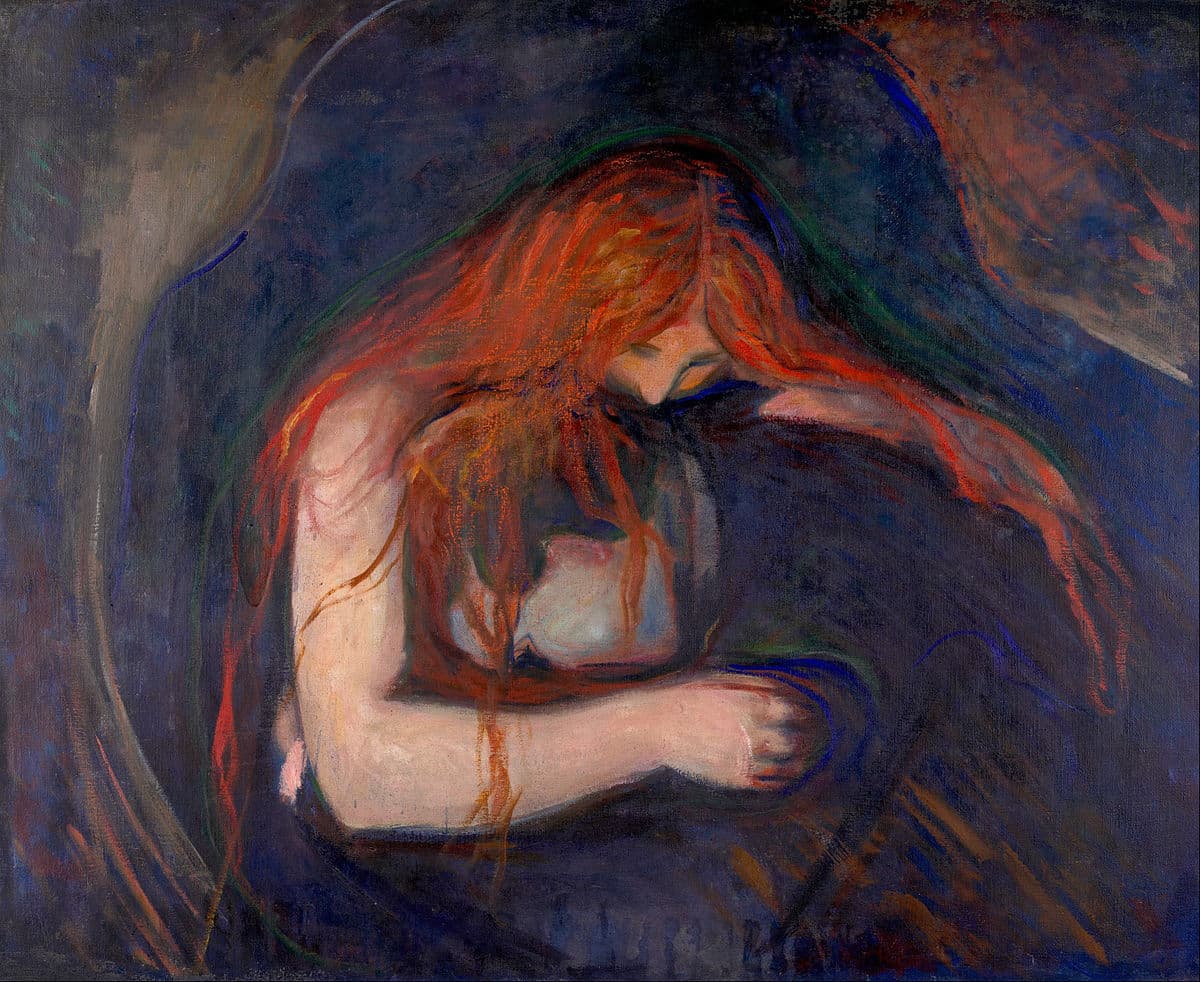
Vampire (Love and Pain)
Edvard Munch · 1895
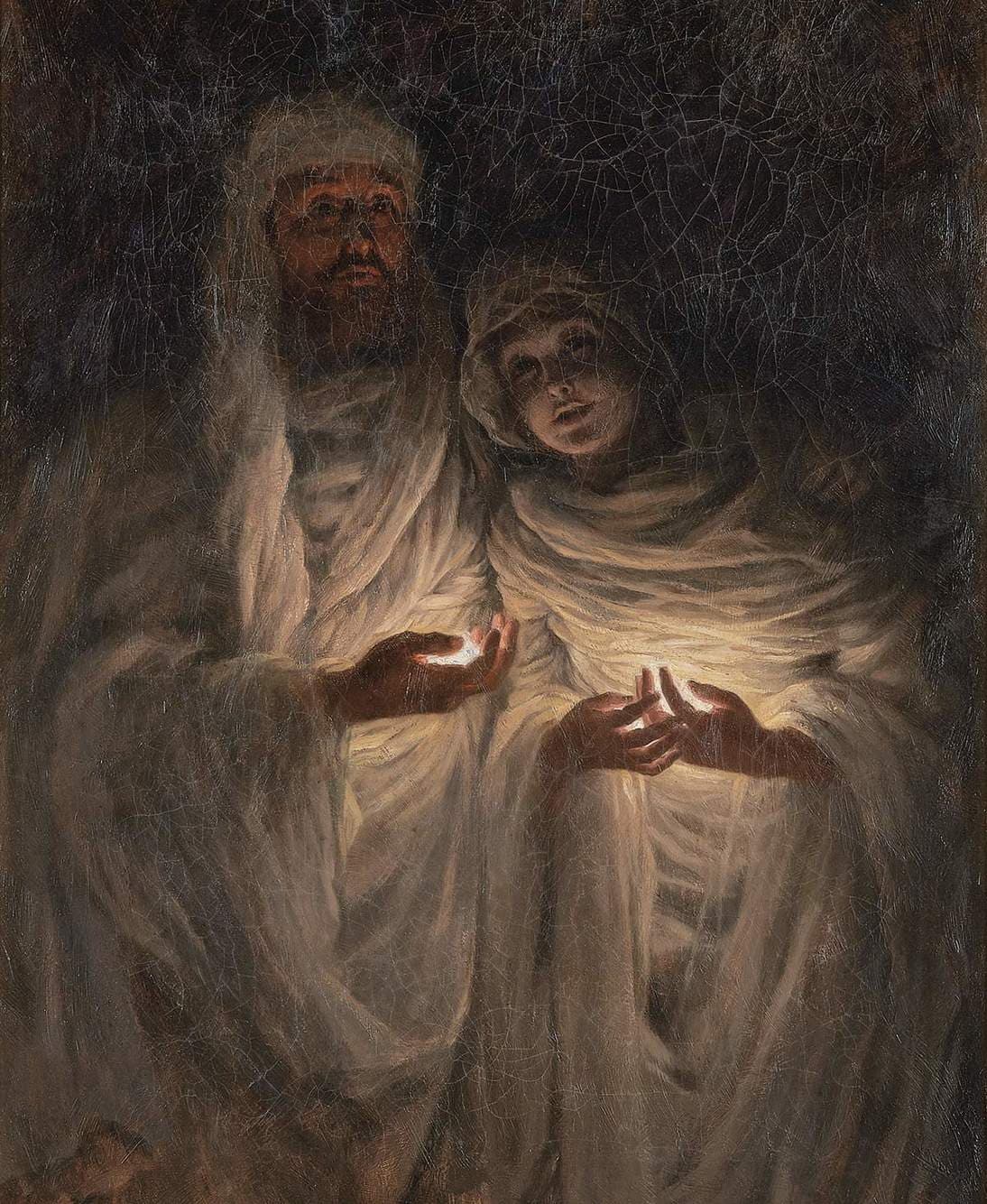
The Apparition
James Tissot · 1885
Starlight
Émile Vernon

Venus de Milo
Alexandros of Antioch · c. 150–125 BC

The Scream
Edvard Munch · 1893
The Thinker
Auguste Rodin · Modeled 1880–82; enlarged 1902–03; this cast 1904

Saturn Devouring His Son
Francisco Goya · c. 1819–1823

Ophelia
John Everett Millais · 1851–52