Digital art
Destination Cosmos
Centre National d'Études Spatiales (CNES), 2022
Destination Cosmos is an immersive digital exhibition on humanity's exploration of the universe, from early astronomy to the Apollo 11 Moon landing, credited with the French space agency CNES and shown in July 2022.
- Date
- 2022
- Medium
- Immersive digital projection
- Movement
- Digital art
Destination Cosmos is an immersive digital exhibition about humanity's long effort to understand and travel into space, from early astronomical observation to the Apollo 11 Moon landing of July 1969. It is credited with the Centre National d'Études Spatiales (CNES), the French space agency, and ran from 1 to 30 July 2022. Its venue and production team have not been confirmed.
What you are looking at
The image shows a large, dark exhibition hall. On the far wall, a giant projection of the Sun fills almost the entire height of the room: a churning sphere of orange, yellow and deep red, its surface boiling with bright active regions and dark filaments, its edge flaring with loops of plasma. The projected light spills onto the floor, which is itself covered in moving orange patterns, so the visitor seems to stand in the glow of the star.
In the foreground, low round seats or tables stand in silhouette, giving scale. Their small dark shapes against the vast burning disc make the human viewer feel tiny, which is the point of an exhibition about the cosmos. The Sun, about 109 times the diameter of the Earth, is here enlarged to the scale of a building, yet it still reads as distant and overwhelming.
Immersive exhibitions
Since the late 2010s, immersive digital shows, in which images are projected across the walls and floors of large halls, have become a popular format, used for everything from Van Gogh's paintings to scientific subjects. Views of the Sun like the one here usually draw on imagery from solar observatories and spacecraft, in which ultraviolet wavelengths are rendered in false color to show the structure of the solar atmosphere.
Such shows sit between art, education and entertainment. They borrow the language of the planetarium and the cinema rather than the gallery, and they let a scientific image be experienced physically, at architectural scale.
Related works
For older visions of the night sky, see Vincent van Gogh's The Starry Night and Edvard Munch's Starry Night. Yves Klein's Infinite Blue takes another route into boundless space. More at CNES.
Questions & answers
What was Destination Cosmos?
Destination Cosmos was an immersive digital exhibition about the exploration of space, tracing human curiosity about the universe from early astronomy to the Apollo 11 Moon landing. It used large-scale projections on walls and floors, such as a giant image of the Sun, and ran in July 2022.
Who made Destination Cosmos?
The exhibition is credited with the Centre National d'Études Spatiales (CNES), the French national space agency founded in 1961. CNES supports public outreach and education about space science, and immersive projections like this draw on imagery from space missions and observatories.
Is the Sun image in Destination Cosmos real?
Images of the Sun like the one projected here are usually based on real observations from solar telescopes and spacecraft, captured in ultraviolet or other wavelengths and shown in false color. The colors highlight structures such as active regions and plasma loops that are invisible to the naked eye.
Kindred works
You may also study
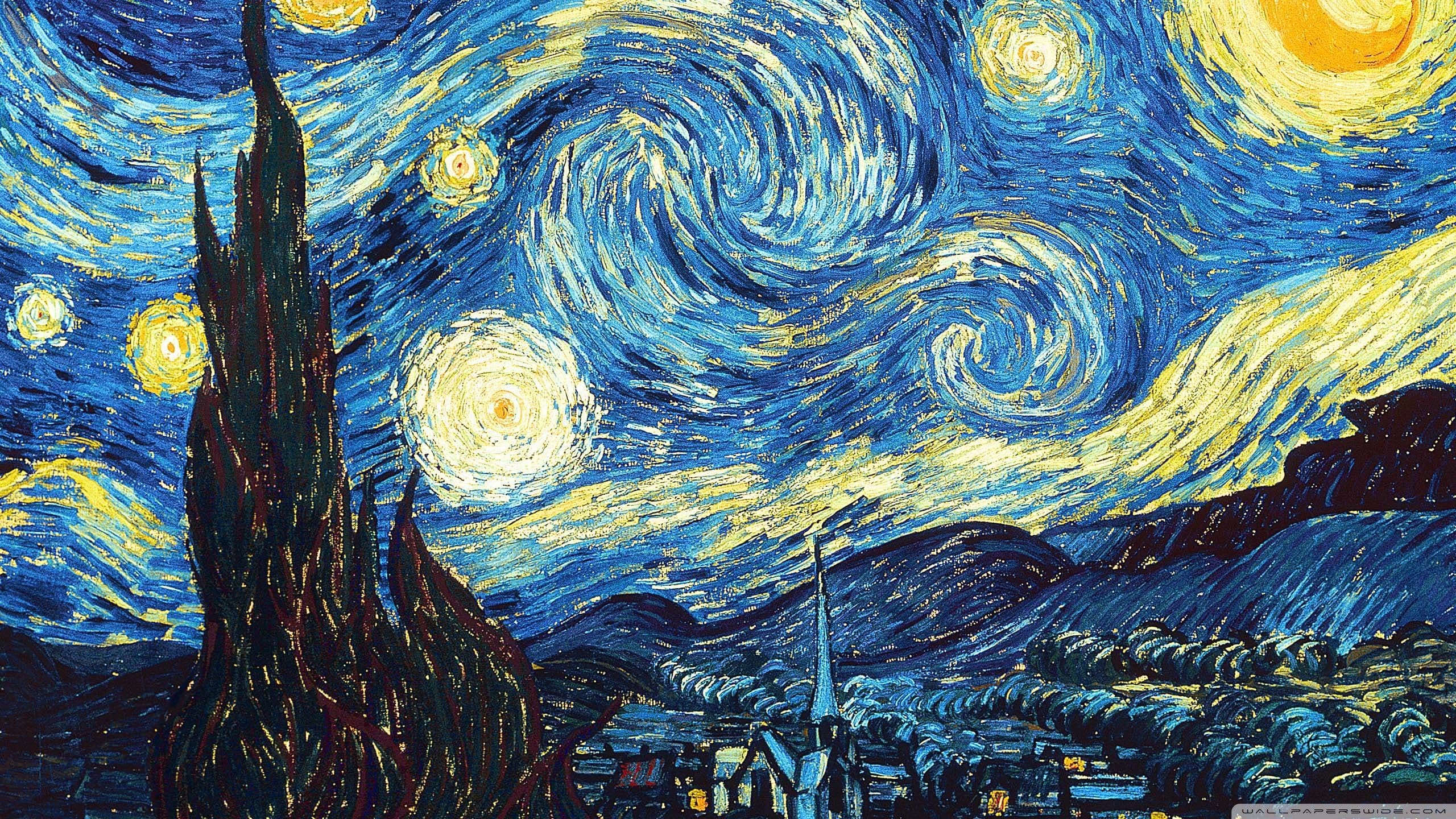
The Starry Night (van Gogh)
Vincent van Gogh · 1889
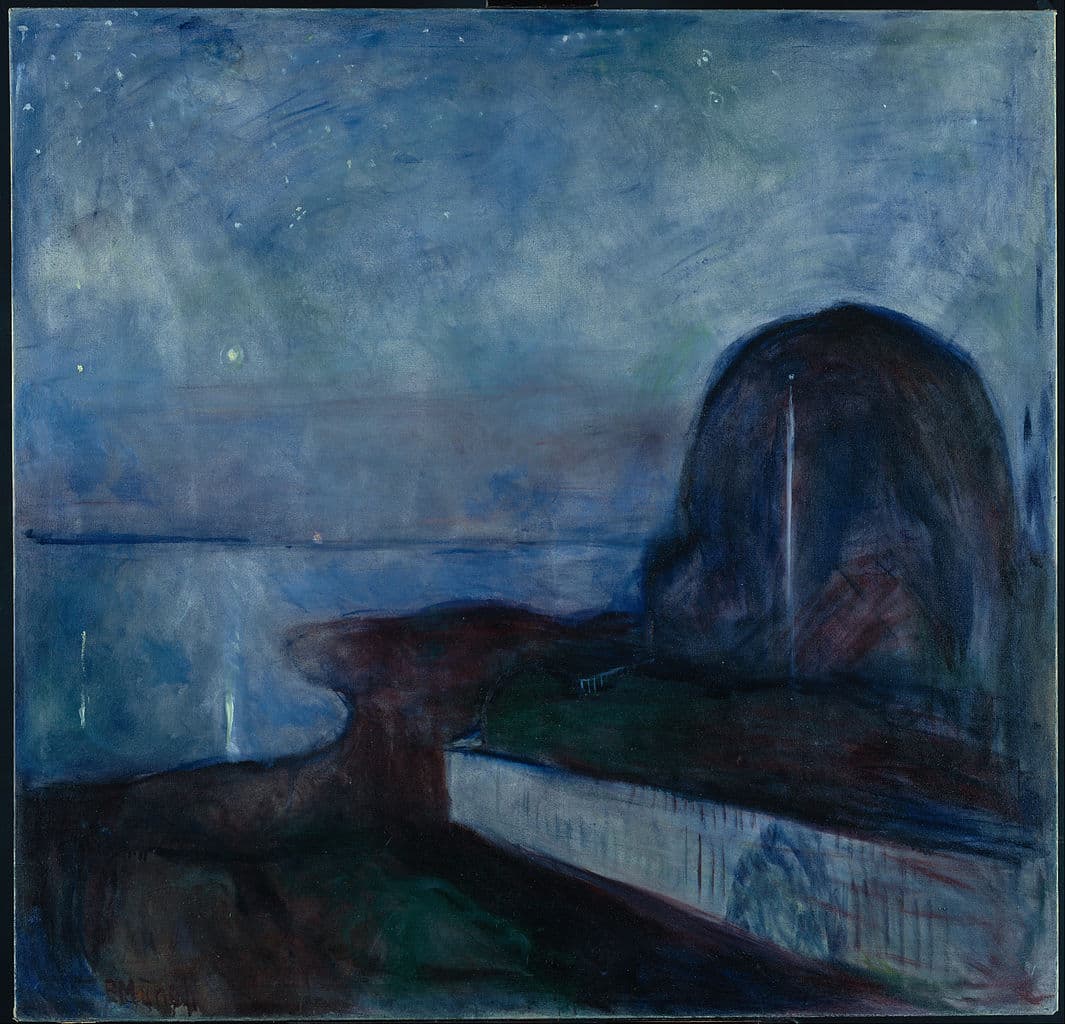
Starry Night (Munch)
Edvard Munch · 1893
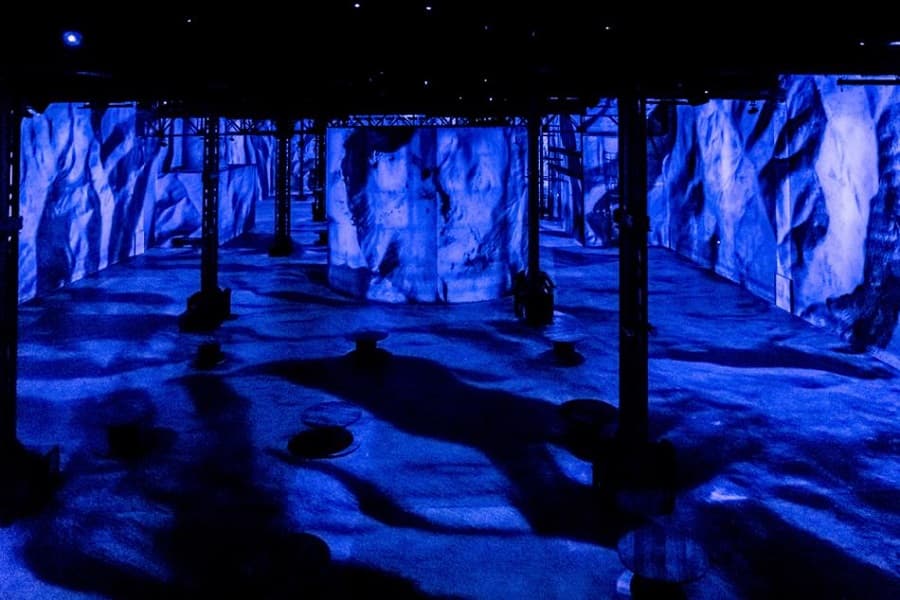
Yves Klein, Infinite Blue (Immersive Exhibition)
Yves Klein · 2020
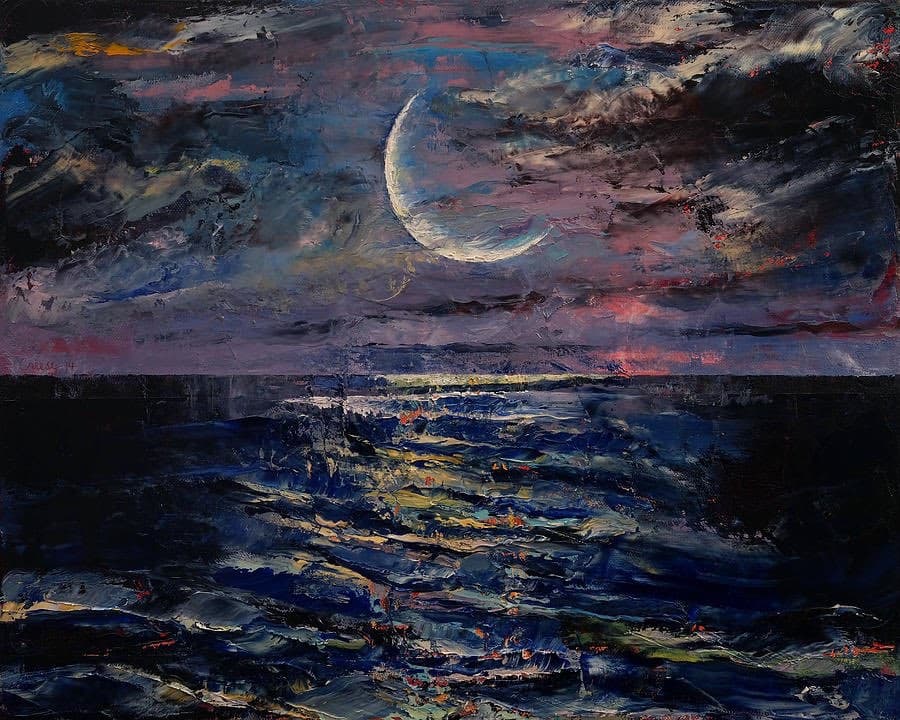
Moon
Michael Creese · 2015

Bridge over a Pond of Water Lilies
Claude Monet · 1899

Nymphs Dancing to Pan's Flute
Joseph Tomanek

The Scream
Edvard Munch · 1893

Ophelia
John Everett Millais · 1851–52