Danish · Neoclassicism · Romanticism
Nicolai Abraham Abildgaard
b. 11 September 1743, Copenhagen — d. 4 June 1809, Frederiksdal, near Copenhagen
Nicolai Abraham Abildgaard (1743–1809) was a Danish painter, designer and director of the Royal Danish Academy of Fine Arts, a Neoclassicist whose dark, literary subjects, such as his 1800 Nightmare, point toward Romanticism.
1 work in the collection
Works by Nicolai Abraham Abildgaard
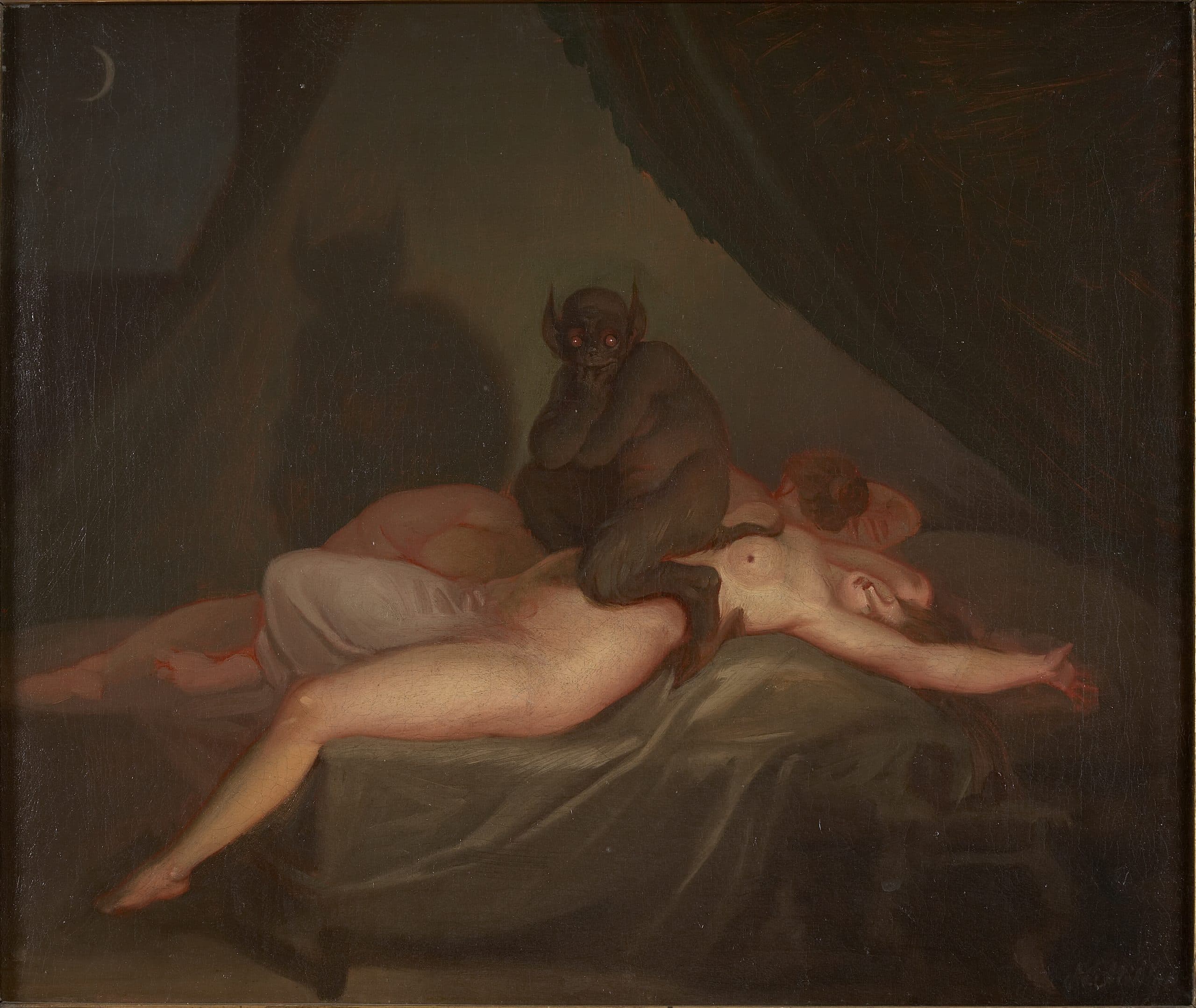
Nicolai Abraham Abildgaard (1743–1809) was the leading Danish history painter of the late eighteenth century. He trained and later taught at the Royal Danish Academy of Fine Arts in Copenhagen, and his best-known work today is Nightmare (1800), now in the Sorø Kunstmuseum.
Life in brief
Born in Copenhagen, the son of an antiquarian draftsman, Abildgaard studied at the Academy and won its gold medal, which paid for a long stay in Rome in the 1770s. There he copied antique sculpture and Renaissance painting and met artists from across Europe, including the Swiss painter Henry Fuseli. Back in Copenhagen he became a professor at the Academy and served as its director, teaching a generation that included the sculptor Bertel Thorvaldsen and the painter C. W. Eckersberg.
Style and subjects
Abildgaard's drawing and compositions are Neoclassical: clear contours, antique dress, figures arranged like a relief. His choice of subjects is less calm. He painted scenes from Ossian, Shakespeare and Greek tragedy, often at night or at moments of suffering, as in The Wounded Philoctetes (1775), now in the National Gallery of Denmark. He also designed furniture and interiors in an archaeological antique style.
His largest commission, a cycle of history paintings for Christiansborg Palace, was mostly destroyed when the palace burned in 1794, which is one reason his reputation rests on a smaller number of surviving works.
Nightmare
Nightmare shows a demon crouched on a sleeping woman, a direct conversation with Fuseli's famous The Nightmare of 1781. Abildgaard's version is more contained and stranger in its details, with a second sleeper beside the victim. It sits comfortably among the catalogue's Romanticism and Angels & Demons pages.
Where to see his work
The National Gallery of Denmark (SMK) in Copenhagen holds the largest group of his paintings; Nightmare is in the Sorø Kunstmuseum.
Questions & answers
Who painted Nightmare in 1800?
Nightmare (Mareridt), dated 1800, was painted by the Danish artist Nicolai Abraham Abildgaard. It shows a demon crouching on a sleeping woman and responds to Henry Fuseli's The Nightmare of 1781. It belongs to the Sorø Kunstmuseum in Denmark.
What art movement was Abildgaard part of?
Abildgaard was a Neoclassical painter in style, trained on antique sculpture in Rome, but his taste for night scenes, Ossian, Shakespeare and suffering heroes anticipates Romanticism. He is usually described as a bridge between the two in Danish art.
Where can I see Abildgaard's paintings?
The National Gallery of Denmark (SMK) in Copenhagen holds most of his surviving paintings, including The Wounded Philoctetes. His Nightmare is in the Sorø Kunstmuseum. Much of his major palace decoration was lost in the Christiansborg fire of 1794.