Czech · Symbolism · Academic art
Maximilian Pirner
b. 13 February 1854, Sušice, Bohemia — d. 2 April 1924, Prague
Maximilian Pirner (1854–1924) was a Czech painter and illustrator who moved from academic history painting to Symbolism, known for macabre and mythological works such as Finis (1887) and Hekate (1901). He was a long-serving professor at the Prague Academy.
1 work in the collection
Works by Maximilian Pirner
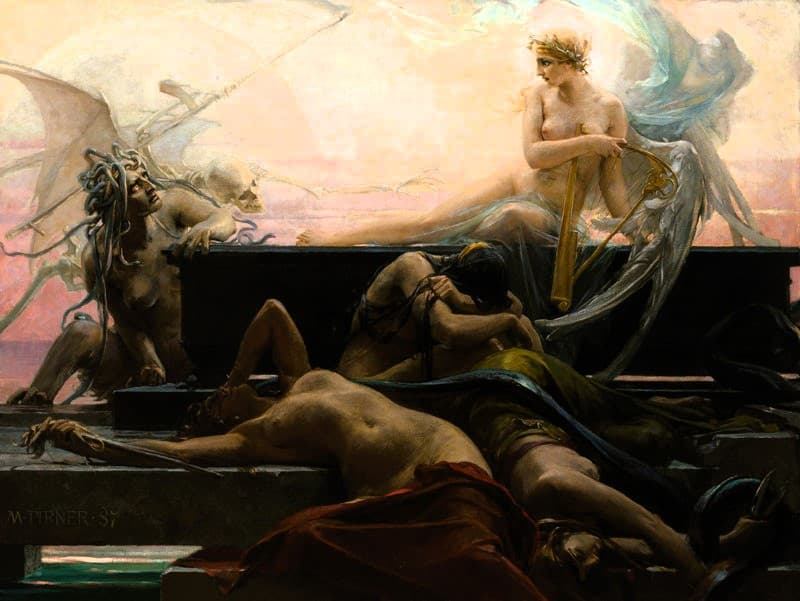
Maximilian (Maxmilián) Pirner was a Czech painter, illustrator and draftsman whose work bridges late academic painting and Symbolism. His themes were philosophy, myth and death: Medusa, Hekate, demonic love and allegories of the end of things, of which Finis (The End of All Things) (1887), in the National Gallery Prague, is a prime example.
Life
Pirner was born on 13 February 1854 in Sušice, in southwestern Bohemia, the son of a court official. He studied monumental painting at the Prague Academy of Fine Arts from 1872 to 1874 under Josef Matyáš Trenkwald, then followed Trenkwald to the Vienna Academy, where he stayed until 1879. He lived mostly in Vienna until 1887 and later exhibited at the first Vienna Secession exhibition.
In 1887 he was called to teach at the Prague Academy, became professor in 1896 and ran its figure-painting studio. He served several terms as rector between 1898 and 1912 and influenced two generations of Czech painters. He died in Prague on 2 April 1924.
Style and themes
Pirner's first mature works are large, highly finished academic compositions. Later he favored intimate drawings, pastels and gouaches in a Symbolist and Art Nouveau idiom. One critic praised his "mastery of the sinuous line"; another called him an over-sophisticated mystic. His pictures mix fantasy with irony and even sarcasm, and the female figure, often nude, is everywhere.
Key works include Somnambula (Sleepwalker, 1878), the pastel cycle Demon Love (1883–84), the triptych Life, Love, Hate and Death (1880–96), Finis (1887), Nymphs at the Spring (1895), Hekate (1901) and Homo homini lupus (1901), dedicated to the memory of Schopenhauer. He also illustrated Lenau, Heine and Lessing and drew for the Viennese journal Ver Sacrum.
Where to see his work
The National Gallery Prague holds his most important paintings, including Finis. For context, see our guides to Symbolism and death in art, or compare Hugo Simberg's gentler visions of mortality on the Hugo Simberg page.
Questions & answers
Who was Maximilian Pirner?
Maximilian Pirner (1854–1924) was a Czech painter and illustrator from Sušice who trained in Prague and Vienna and taught for decades at the Prague Academy of Fine Arts. He is known for Symbolist and macabre works on myth, love and death.
What is Finis by Maximilian Pirner?
Finis (The End of All Things), painted in 1887, is an allegory in which Medusa and a winged Death appear with a muse holding a lyre above fallen bodies. It belongs to the National Gallery Prague.
Was Pirner a Symbolist?
Yes, in his mature work. He began as an academic history painter but moved toward Symbolism and Art Nouveau, with subjects such as Medusa, Hekate and Demon Love, and drew for the Vienna Secession journal Ver Sacrum.