American · Neoclassicism
Chauncey Bradley Ives
b. 14 December 1810, Hamden, Connecticut — d. 2 August 1894, Rome
Chauncey Bradley Ives (1810–1894) was an American Neoclassical sculptor who spent most of his career in Rome, known for ideal marble figures such as Undine Rising from the Waters (Yale University Art Gallery).
1 work in the collection
Works by Chauncey Bradley Ives
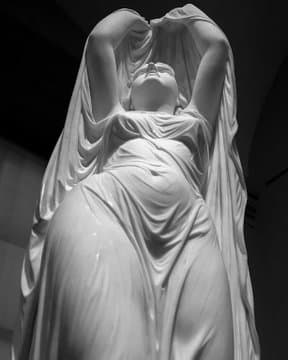
Chauncey Bradley Ives (1810–1894) was an American sculptor from Connecticut who belonged to the generation of American Neoclassicists working in Italy. He lived in Rome for more than forty years and is best known for Undine Rising from the Waters, a marble at the Yale University Art Gallery.
Life in brief
Ives was born in Hamden, near New Haven, and trained first as a woodcarver before turning to portrait busts. Like many American sculptors of his time, he went to Italy for marble, skilled carvers and antique models, settling in Florence in 1844 and moving to Rome in 1851, where he stayed for the rest of his life. His studio produced portrait busts for American visitors and ideal figures that were repeated in many marble copies for buyers back home. He also made public statues, including Roger Sherman and Jonathan Trumbull, Connecticut's two figures in the National Statuary Hall in Washington.
Style
Ives worked in the Neoclassical manner of Canova and Thorvaldsen, but his ideal subjects lean toward Victorian sentiment and literary fantasy: Pandora, Rebecca at the Well, Sans Souci. His great technical showpiece was wet, clinging drapery.
Undine Rising from the Waters
Undine is the water spirit of Friedrich de la Motte Fouqué's 1811 novella, who gains a human soul by marrying a mortal knight and is later forced back into the water. Ives shows her rising from a well, lifting a veil above her head. The marble cloth is carved so thin and close to the body that it seems soaked through, an illusion that recalls the veiled women of Antonio Corradini. Yale's version is dated 1880, though Ives developed the design earlier and it exists in several replicas.
Where to see his work
The Yale University Art Gallery, the U.S. Capitol, and American museums such as the Metropolitan Museum of Art hold his sculpture. See also Famous Sculptures.
Questions & answers
Who sculpted Undine Rising from the Waters?
Undine Rising from the Waters is a marble by the American sculptor Chauncey Bradley Ives, carved in Rome. The Yale University Art Gallery's version is dated 1880. It shows the water spirit Undine lifting a wet veil as she rises from a well.
Who was Undine?
Undine is a water spirit from Friedrich de la Motte Fouqué's 1811 German novella Undine. She marries a mortal knight to gain a human soul, but when he is unfaithful she must return to the water. The story inspired operas, ballets and many artworks.
Where did Chauncey Bradley Ives work?
Ives trained in Connecticut, then worked in Florence from 1844 and in Rome from 1851 until his death in 1894. Like other American Neoclassical sculptors, he went to Italy for its marble, skilled carvers and classical models.