Italian (Venetian) · Late Baroque · Rococo
Sebastiano Ricci
b. 1659, Belluno, Republic of Venice — d. 15 May 1734, Venice
Sebastiano Ricci (1659–1734) was a Venetian painter who revived the bright, airy grandeur of Veronese and carried it across Europe, from Rome and Florence to London. His work opened the way for Tiepolo and the Venetian Rococo.
1 work in the collection
Works by Sebastiano Ricci
Sebastiano Ricci was a painter from Belluno, in the Venetian mainland, born in 1659, whose luminous altarpieces and ceiling decorations helped bring Venetian painting back to European prominence after a long decline. Looking back past the dark Baroque of the seventeenth century to Paolo Veronese, he restored light color, open skies and elegant, theatrical compositions, and in doing so prepared the ground for Giambattista Tiepolo.
Life in brief
Ricci trained in Venice and then worked in Bologna, Parma, Rome and Florence, absorbing the lessons of Correggio, the Carracci and Roman ceiling painters. His early life was turbulent: scandals over a love affair forced him to leave more than one city. From the 1690s he was in demand across Italy and beyond, working in Vienna for the imperial court and in Florence, where his ceilings in the Palazzo Marucelli survive. From about 1712 to 1716 he was in England with his nephew Marco Ricci, a landscape painter; there he painted for Lord Burlington and the apse of the chapel of the Royal Hospital, Chelsea. He then returned to Venice, where he worked until his death in 1734.
Style
Ricci's paintings are full of movement and light: figures tumble through clouds, draperies flutter in silvery pinks and blues, architecture opens to the sky. His debt to Veronese was so open that he sometimes painted in deliberate imitation of him. The touch is quick and fluent, and the drama stays elegant rather than violent.
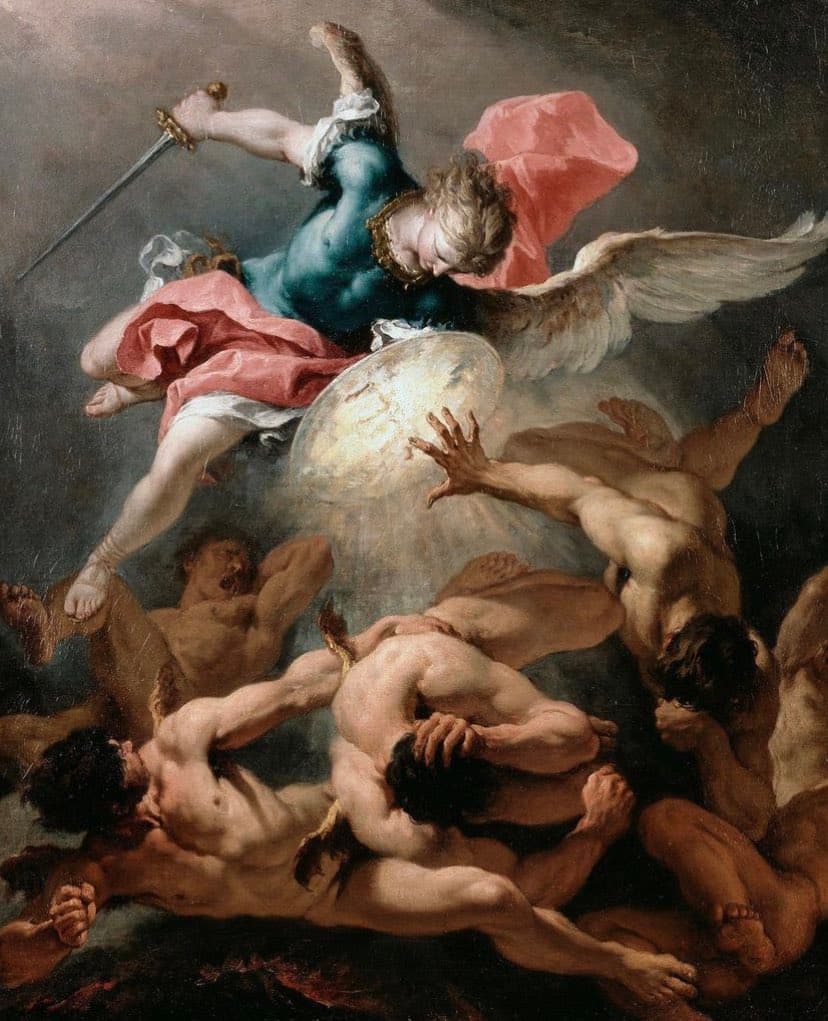
The Fall of the Rebel Angels
The Fall of the Rebel Angels shows the Archangel Michael, in shining armor, driving Lucifer and the rebellious angels out of heaven, a subject from the Book of Revelation. The rebels plunge headlong in twisted poses, their bodies darkening as they fall away from the light. A version of about 1720 is in the Dulwich Picture Gallery in London. Compare later treatments of the same fall in Fallen Angels in Art.
Where to see his work
Ricci's paintings are in churches and palaces in Venice, Florence and Rome, in the Gallerie dell'Accademia in Venice, in the Royal Collection and Chelsea Hospital in London, and in the Dulwich Picture Gallery. See more in Baroque Art and Angels & Demons in Art.
Questions & answers
Who was Sebastiano Ricci?
Sebastiano Ricci (1659–1734) was a Venetian painter from Belluno who revived the bright color and grandeur of Paolo Veronese. He worked across Italy, in Vienna and in London, and influenced Tiepolo and the Venetian Rococo.
Where is Sebastiano Ricci's Fall of the Rebel Angels?
A version of Sebastiano Ricci's The Fall of the Rebel Angels, dated about 1720, is in the Dulwich Picture Gallery in London. It shows the Archangel Michael casting Lucifer and the rebel angels out of heaven.
Did Sebastiano Ricci work in England?
Yes. From about 1712 to 1716 Ricci worked in England with his nephew Marco Ricci, painting for Lord Burlington at Burlington House and decorating the apse of the chapel at the Royal Hospital, Chelsea.