Italian · Renaissance
Gian Paolo Rainieri
b. 15th century, Reggio Emilia — d. c. 1498 (sources differ)
Gian Paolo Rainieri was a Renaissance clockmaker from Reggio Emilia, commissioned by Venice in 1493 to build the astronomical clock of St. Mark's Clocktower, which he made with his son Gian Carlo.
1 work in the collection
Works by Gian Paolo Rainieri
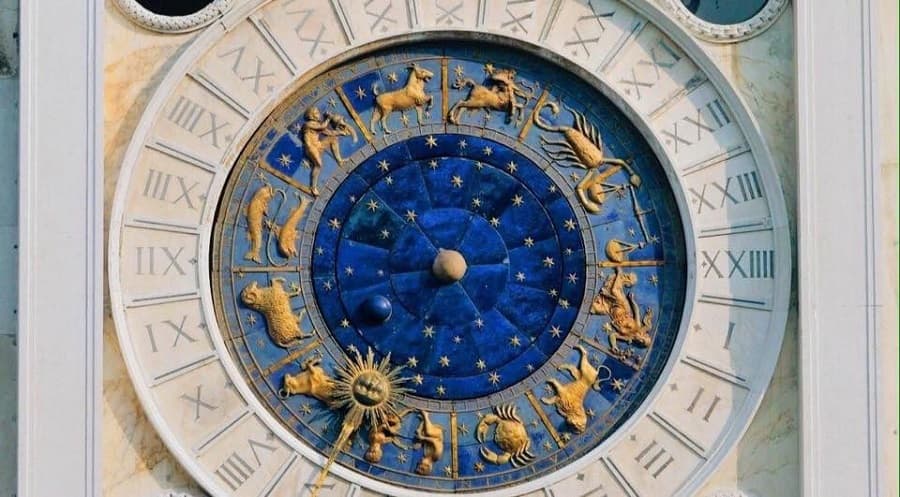
Gian Paolo Rainieri (also spelled Ranieri) was an Italian clockmaker from Reggio Emilia, in Emilia-Romagna, who designed and built the astronomical clock of the Torre dell'Orologio in Venice with his son, Gian Carlo Rainieri. He was the father in this partnership; some older accounts reverse the two.
Before Venice
Rainieri had already made public clocks in Reggio Emilia, including one recorded in 1481, and it was this reputation that brought him to the attention of the Venetian government. Public clocks with astronomical dials and moving figures were prestige projects for Italian cities in the fifteenth century, statements of civic wealth and technical skill as much as timekeepers.
The clock of St. Mark's
In 1493 the Venetian Senate commissioned Gian Paolo Rainieri (also spelled Ranieri), a clockmaker from Reggio Emilia who had already built clocks in his home town, to make a great public clock for Piazza San Marco. A new tower to house it was built at the north side of the square in 1496–97, at the point where the Mercerie, Venice's main shopping street, enters the piazza; its design is usually attributed to Mauro Codussi. The clock was installed and unveiled on 1 February 1499, a date recorded by the diarist Marin Sanudo. See St. Mark's Clocktower.
The great dial, in blue enamel and gold, shows the 24 hours in Roman numerals, the signs of the zodiac and the phases of the moon. Above it stand a gilded Virgin and Child, flanked by doors from which figures of the Magi, led by an angel, emerge to bow to the Virgin during Ascension week and at Epiphany. Higher still is the winged lion of St. Mark against a starry blue ground, and on the roof two bronze giants, known as the Moors for their dark patina, strike the hours on a great bell.
His death and the finishing of the work
Sources disagree about when Gian Paolo died. Some say 1498, before the unveiling, leaving his son to complete and install the mechanism; others say he had died by 1500. Either way, it was Gian Carlo who stayed in Venice to maintain the clock and was rewarded by the Republic with a lifetime annuity and the post of clock keeper.
Legacy
The clock has been altered and restored many times, notably in the 1750s, when a new mechanism was installed, and in a long restoration completed in 2006. Little of the Rainieris' original works survives, but the dial, the figures and the overall design remain theirs, and the clock is one of the best-known images of Renaissance Venice. For other Gothic and Renaissance buildings in our catalogue, see Gothic Art and Renaissance art.
Where to see it
The clock tower stands on the north side of Piazza San Marco. Guided tours climb to the terrace with the bell and the bronze Moors.
Questions & answers
Who was Gian Paolo Rainieri?
Gian Paolo Rainieri was a clockmaker from Reggio Emilia whom the Venetian Senate commissioned in 1493 to build a great public clock. With his son Gian Carlo he made the astronomical clock of St. Mark's Clocktower, unveiled on 1 February 1499.
When was St. Mark's Clocktower built?
The tower was built in 1496–97, probably to a design by Mauro Codussi, and the Rainieri clock was installed and unveiled on 1 February 1499. Side wings were added later, and the mechanism has been restored several times since.
Is the St. Mark's clock still working?
Yes. After a long restoration completed in 2006, the clock runs and the bronze Moors still strike the hours. The mechanism has been replaced and modified over the centuries, so most of what now works is not the Rainieris' original.