French · Academic art · Symbolism · Orientalism
Georges Rochegrosse
b. 2 August 1859, Versailles — d. 11 July 1938, El Biar, Algeria
Georges Rochegrosse (1859–1938) was a French academic painter of vast, violent history scenes and Symbolist fantasies, from The Fall of Babylon to The Knight of the Flowers (1894, Musée d'Orsay).
2 works in the collection
Works by Georges Rochegrosse
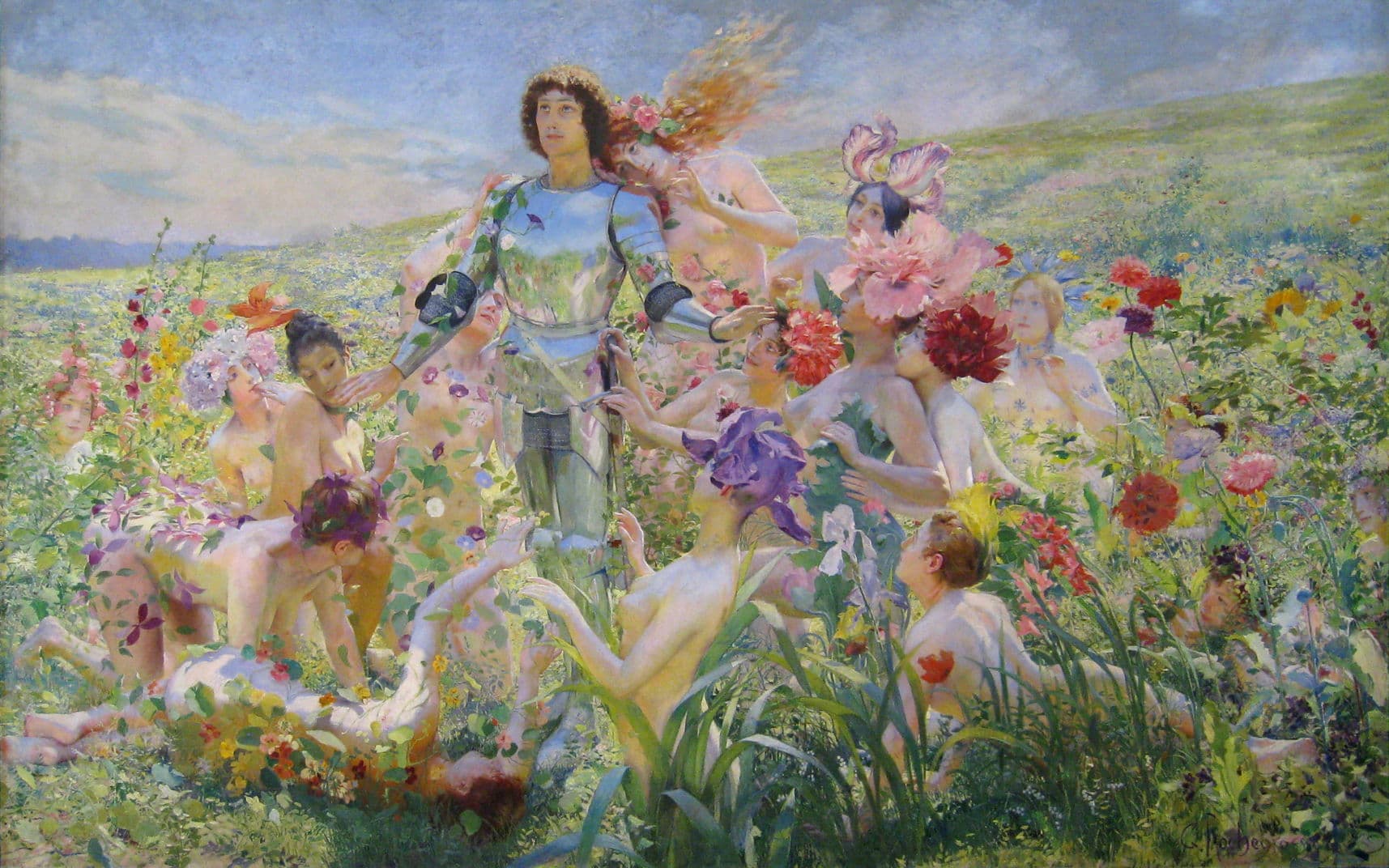
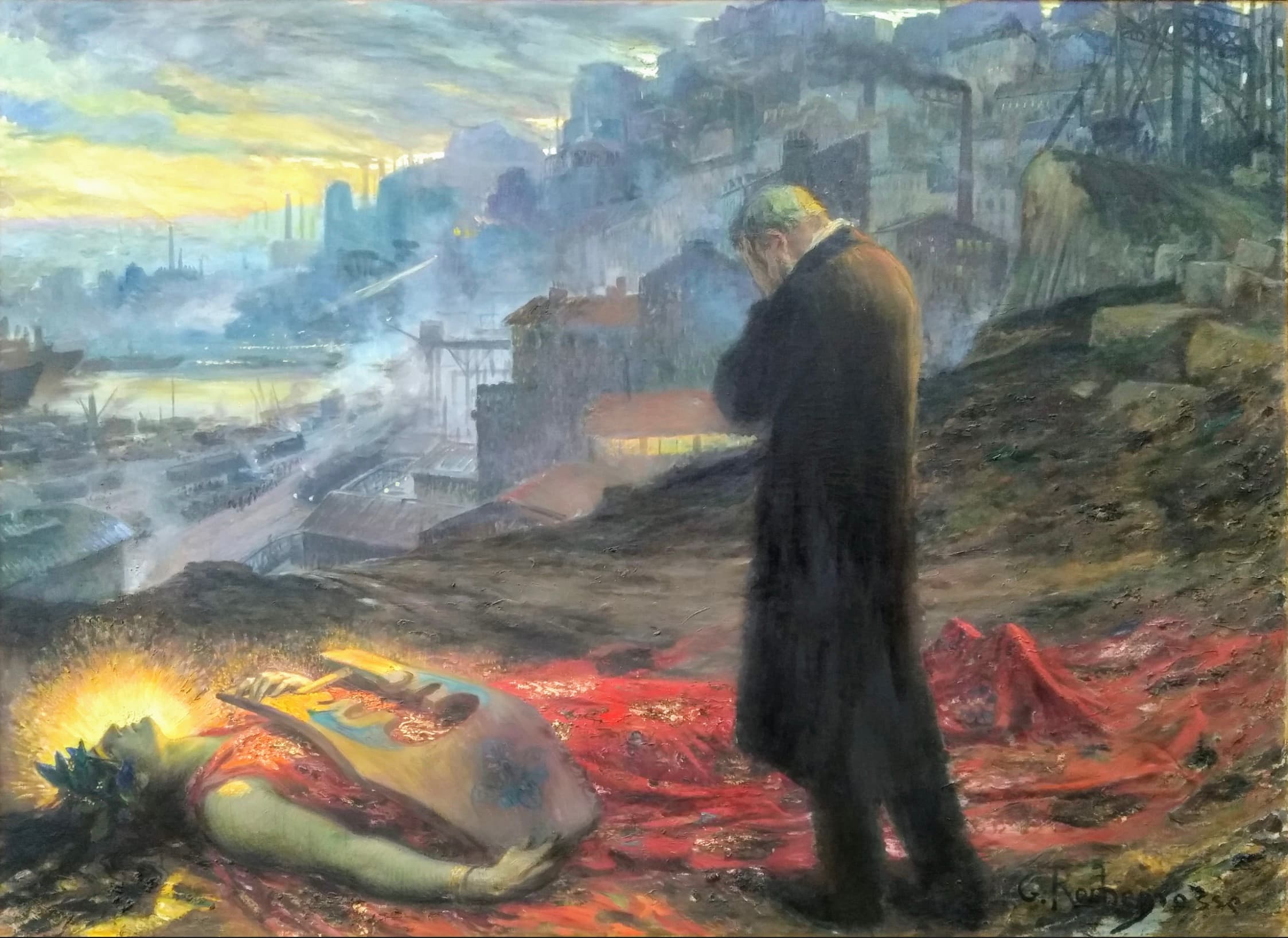
Georges Rochegrosse (1859–1938) was a French painter who specialized in huge, crowded, often brutal scenes from ancient and medieval history, and later in Symbolist and Orientalist subjects. Two of his paintings are in our catalogue: The Knight of the Flowers (1894, Musée d'Orsay) and La Mort de la pourpre (1914, Musée d'arts de Nantes).
Life in brief
Born in Versailles, Rochegrosse grew up in the household of his stepfather, the poet Théodore de Banville, among writers and artists. He studied with Jules Lefebvre and Gustave Boulanger and made his Salon debut in 1882 with Vitellius Dragged through the Streets of Rome. The next year his Andromache (Musée des Beaux-Arts, Rouen) won a Salon prize and established him. Spectacles of massacre and collapse followed: The Jacquerie, The Fall of Babylon (1891). He also illustrated books, including works by Flaubert and Banville. From around 1900 he spent much of his life in Algeria, painting Orientalist scenes, and he died at El Biar near Algiers in 1938.
Style
Rochegrosse painted with academic precision on an enormous scale, crowding his canvases with archaeological detail, rich fabrics and bodies in extremity. Critics admired his energy and were often disturbed by his relish for horror.
The Knight of the Flowers
Exhibited at the 1894 Salon and bought by the French state, Le Chevalier aux fleurs is inspired by Wagner's Parsifal: the pure knight walks in silver armor through a meadow of nude flower maidens who try to seduce him, and does not look at them. The women's bodies merge with the blossoms around them, an image of temptation resisted that suited the Symbolist taste for chastity and danger.
La Mort de la pourpre
Painted on the eve of the First World War, The Death of the Purple shows a dead, haloed figure of Art laid on a crimson cloth while a man in black mourns, above a harbor full of smoking factories. It is a Symbolist lament for beauty in an industrial age. See more in Symbolism.
Where to see his work
The Musée d'Orsay in Paris, the museums of Rouen and Nantes and several French regional museums hold his paintings.
Questions & answers
What does Rochegrosse's The Knight of the Flowers show?
Inspired by Wagner's opera Parsifal, the 1894 painting shows a young knight in silver armor walking unmoved through a meadow of nude flower maidens who try to tempt him. It was bought by the French state and is now in the Musée d'Orsay.
Where is La Mort de la pourpre?
Georges Rochegrosse's La Mort de la pourpre (The Death of the Purple), painted in 1914, is in the Musée d'arts de Nantes in France. It shows a mourning man beside a dead, haloed figure of Art above an industrial harbor.
Who was Georges Rochegrosse?
Georges Rochegrosse (1859–1938) was a French academic painter and illustrator, stepson of the poet Théodore de Banville, known for vast, violent historical scenes such as The Fall of Babylon and later for Symbolist and Orientalist work in Algeria.