French · Modern sculpture · Impressionism · Symbolism
Auguste Rodin
b. 12 November 1840, Paris — d. 17 November 1917, Meudon
Auguste Rodin (1840–1917) was the French sculptor who broke with academic polish and made modern sculpture, known for The Thinker, The Kiss, The Gates of Hell and The Eternal Idol.
2 works in the collection
Works by Auguste Rodin
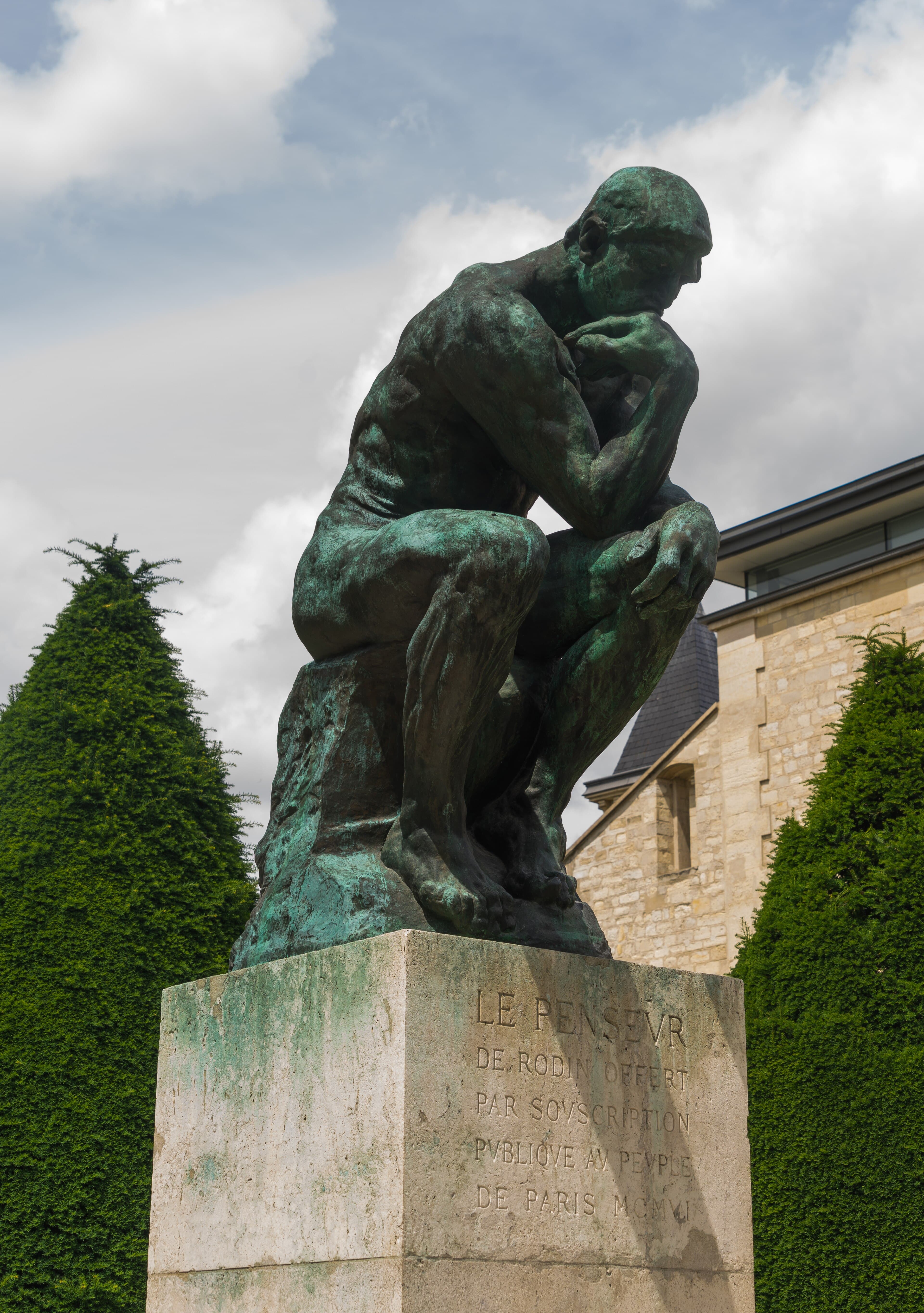
Auguste Rodin (1840–1917) was a French sculptor and the founder of modern sculpture. He replaced the smooth ideal bodies of the academy with rough, restless figures in which the marks of the modeler's thumbs stay visible, and his works, such as The Thinker and The Kiss, are among the most recognized in the world.
Life in brief
Born in Paris to a working-class family, Rodin studied at the Petite École, a school of decorative arts, and was rejected three times by the École des Beaux-Arts. He spent years as an assistant in commercial workshops, including that of Albert-Ernest Carrier-Belleuse. His first major figure, The Age of Bronze (1877), was so lifelike that critics accused him of casting it from a living model. In 1880 the French state commissioned a portal for a planned museum of decorative arts: The Gates of Hell, inspired by Dante, which he worked on for the rest of his life and which spun off The Thinker and The Kiss. Later public monuments, The Burghers of Calais and his Balzac, caused fierce controversy. From the 1880s the sculptor Camille Claudel was his student, collaborator and lover.
Style
Rodin modeled in clay and plaster, and had assistants carve marbles and foundries cast bronzes. He welcomed fragments, rough edges and unfinished stone, letting figures emerge from the block.
The Eternal Idol
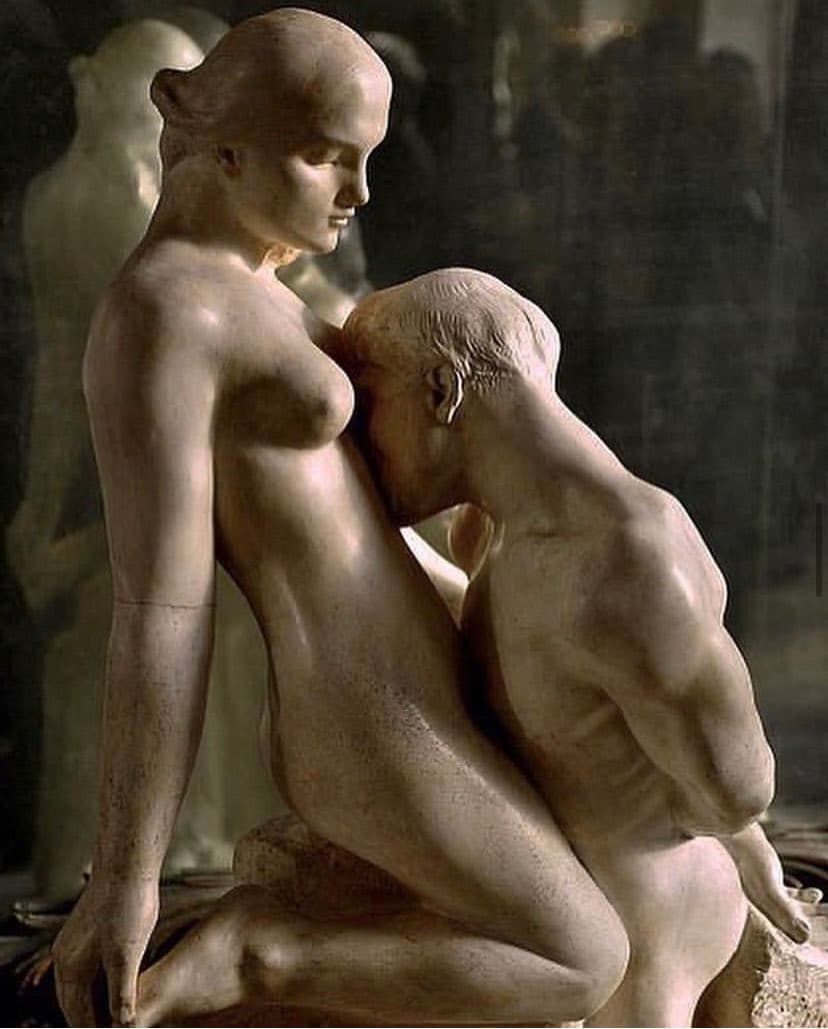
The Eternal Idol (L'Éternelle Idole, catalogued under its Turkish-language title Ebedi İdol) was conceived around 1889. A kneeling man presses his face to the body of a kneeling woman, his arms held behind his back as if he dares not touch her. The first marble (1893) is at the Harvard Art Museums; a plaster belongs to the Musée Rodin.
Where to see his work
The Musée Rodin in Paris and at Meudon holds the largest collection; there are major Rodin collections in Philadelphia and at Stanford. See also Famous Sculptures.
Questions & answers
What is The Eternal Idol by Rodin?
The Eternal Idol (L'Éternelle Idole) is a sculpture by Auguste Rodin, conceived around 1889, of a kneeling man kissing a woman's body with his hands behind his back. The first marble (1893) is at the Harvard Art Museums and a plaster is in the Musée Rodin.
What is Auguste Rodin most famous for?
Rodin is most famous for The Thinker, The Kiss and The Gates of Hell, along with The Burghers of Calais and his monument to Balzac. He is credited with founding modern sculpture by abandoning academic polish for expressive, textured surfaces.
Where is the Musée Rodin?
The Musée Rodin is in the Hôtel Biron in Paris's 7th arrondissement, where Rodin had his studio, with a second site at his home in Meudon, southwest of Paris. Together they hold most of his plasters, bronzes, marbles and drawings.