Dutch · Dutch Golden Age
Eglon van der Neer
b. 1635 or 1636, Amsterdam — d. 3 May 1703, Düsseldorf
Eglon van der Neer (1635/36–1703) was a Dutch painter of elegant interiors, portraits and small history scenes, son of Aert van der Neer and court painter in Düsseldorf; his Judith is in the National Gallery, London.
1 work in the collection
Works by Eglon van der Neer
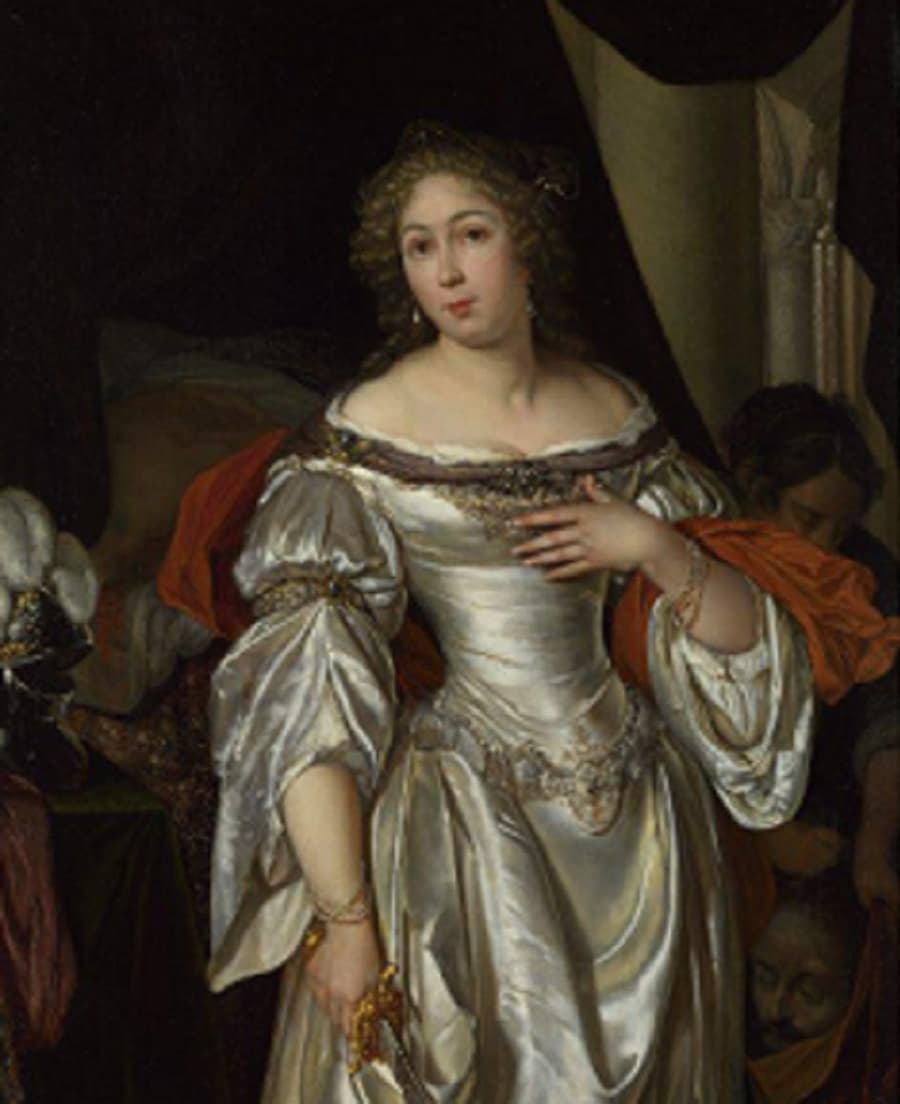
Eglon van der Neer was a Dutch Golden Age painter, the son of the moonlight landscapist Aert van der Neer, who made his career not with landscapes but with small, polished pictures of fashionable people in silk. His Judith (around 1678) belongs to the National Gallery in London.
Life in brief
Born in Amsterdam around 1635–36, Eglon trained first with his father and then with the figure painter Jacob van Loo. In the mid-1650s he went to France, where he worked in the household of a Dutch nobleman, before returning to the Netherlands and settling in Rotterdam. Later he worked in Brussels, and from 1690 he was court painter to Johann Wilhelm, Elector Palatine, in Düsseldorf, where he died in 1703. His pupils included Adriaen van der Werff, who became one of the most expensive Dutch painters of the next generation.
Style
Van der Neer belongs to the "fine painters" (fijnschilders) of the later seventeenth century, who worked on a small scale with invisible brushstrokes and extraordinary attention to materials. His women wear satin that shines like metal, and he took obvious pleasure in pearls, lace, Turkish carpets and polished floors. He painted genre interiors in the manner of Gerard ter Borch and Frans van Mieris, portraits, and, late in life, small landscapes.
Judith
Judith is a small oil on panel showing the biblical heroine who saved her city by beheading the Assyrian general Holofernes. Van der Neer turns the story into a portrait-like costume piece: a young woman in silk and pearls poses with the sword while her maid drops the general's head into a bag. Look at the contrast between the calm face and the grisly bundle at the edge of the picture, which is typical of how Dutch painters of the period softened violent subjects for collectors. Compare Fede Galizia's Judith with the Head of Holofernes and the many biblical women in Baroque Art.
Where to see his work
The National Gallery in London, the Rijksmuseum in Amsterdam and the museums of Munich and Düsseldorf hold examples.
Questions & answers
Who painted Judith in the National Gallery, London?
The small Judith of around 1678 in the National Gallery, London, is by the Dutch painter Eglon van der Neer. A young woman in silk and pearls holds a sword while her maid puts Holofernes' head in a bag.
Was Eglon van der Neer the son of Aert van der Neer?
Yes. Eglon was the son of Aert van der Neer, the Amsterdam painter of moonlit landscapes. Eglon trained with his father but specialized in elegant interiors, portraits and small history pictures instead.
What kind of paintings did Eglon van der Neer make?
He made small, highly finished genre scenes of well-dressed people, portraits and history subjects, painted in the smooth 'fine painting' manner. Late in life he also painted small landscapes. He was court painter in Düsseldorf from 1690.