German · Contemporary art · Conceptual art
Josephine Meckseper
b. 1964, Lilienthal, Germany
Josephine Meckseper (born 1964) is a German-born, New York-based artist whose mirrored shop-window vitrines, films and paintings set consumer goods against images of political protest. Her work is in the Guggenheim's collection.
7 works in the collection
Works by Josephine Meckseper
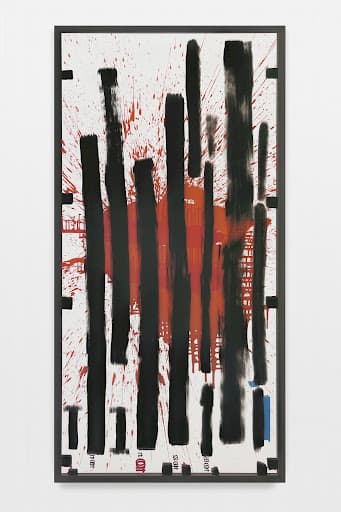
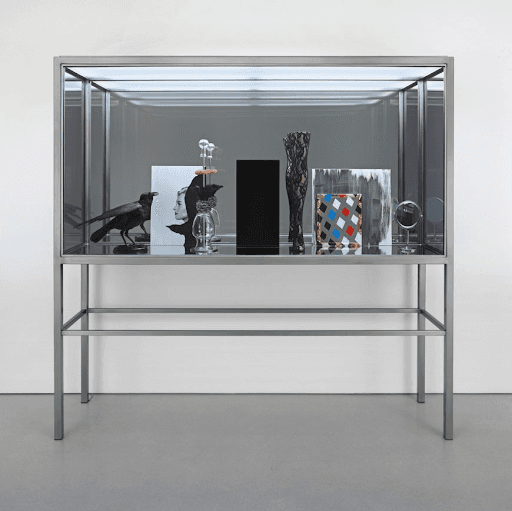
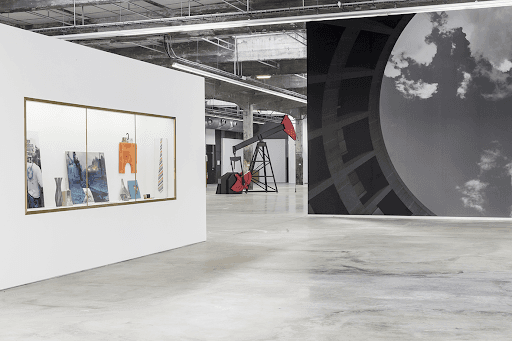
Josephine Meckseper is a German-born artist who lives in New York. She is best known for large glass-and-mirror vitrines that look like shop windows, in which mass-produced consumer objects (bottles, mannequins, clothing, household products) are displayed alongside photographs, flags and posters from political protests. Her films, photographs, sculptures and paintings work the same seam: the place where the language of advertising meets the language of politics. Seven of her works and exhibitions are in our catalogue.
Life and training
Meckseper was born in 1964 in Lilienthal, near Bremen, and grew up in nearby Worpswede, an artists' colony founded around 1900 where Paula Modersohn-Becker and Heinrich Vogeler once worked. Her father is the German painter and printmaker Friedrich Meckseper (1936–2019).
She studied at the Berlin University of the Arts from 1986 to 1990, then took an MFA at the California Institute of the Arts in 1992. At CalArts she was shaped by the conceptual artists Michael Asher and Charles Gaines, the filmmaker Thom Andersen and the theorist Sylvère Lotringer. Her student years coincided with the Gulf War and the 1992 Los Angeles riots, and her first films and installations responded to the Situationists' idea of constructing "situations" as an alternative to capitalist order.
In 1994 she founded FAT Magazine, a conceptual magazine sold at newsstands and supermarkets and also shown in galleries as wallpaper, inspired by Jean-Paul Marat's revolutionary newspaper L'Ami du peuple. She later settled in New York and has received a Guggenheim Fellowship.
Style: the shop window as political theater
Meckseper's vitrines borrow from three sources at once: the department-store window, the museum display case and the abstract art of early Modernism. Objects are arranged with the sleek, glossy order of luxury retail, reflected endlessly in mirrored backs, and interrupted by images of war, protest and power. The result is seductive and uncomfortable: the display invites you to want things while reminding you what wanting things is entangled with.
Her films follow the same principle. She has filmed anti-war and anti-capitalist demonstrations around the world, the Mall of America in Minneapolis, and in PELLEA[S] (2018), an adaptation of Maeterlinck's Symbolist play Pelléas et Mélisande, the 2017 presidential inauguration and the women's march in Washington, D.C.
Key works in our catalogue
- Afrikan Spir (2011). A vitrine with cast aluminum and a stainless steel stand, named after the 19th-century Russian philosopher Afrikan Spir, whose writing influenced Nietzsche. It draws on Hitchcock's The Birds. It was shown in the Guggenheim's Storylines exhibition in New York in 2015.
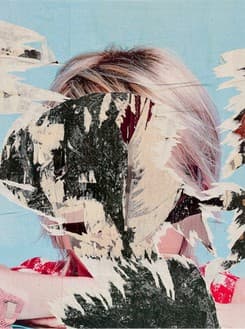
- May she. Have hear. Birds. (2016). A large painting in acrylic and inkjet on linen: a woman's head obliterated by torn, glitch-like printed fragments against flat pale blue.
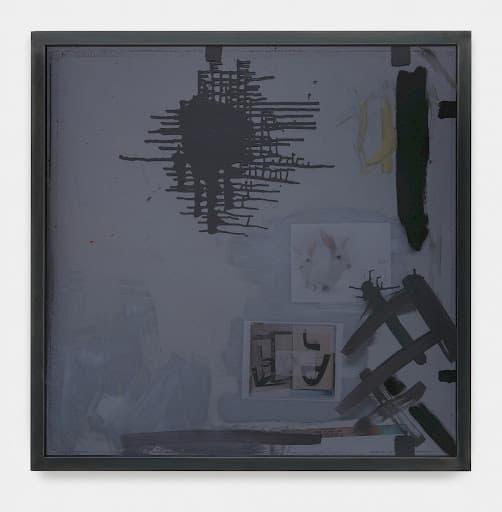
- Filmtract Nº1 and Masculine Feminine, wall works in acrylic sheeting, paint, tape, vinyl and paper on aluminum. Their titles nod to the political cinema of Jean-Luc Godard, whose film Masculin Féminin (1966) shares the second title. Filmtract Nº1 was shown at MOSTYN in Llandudno, her first solo presentation in Wales.
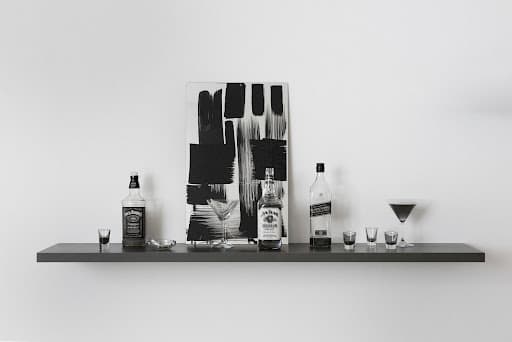
- Here and Elsewhere, a shelf display of liquor bottles, bar glasses and an abstract painting styled like a bar or shop display.
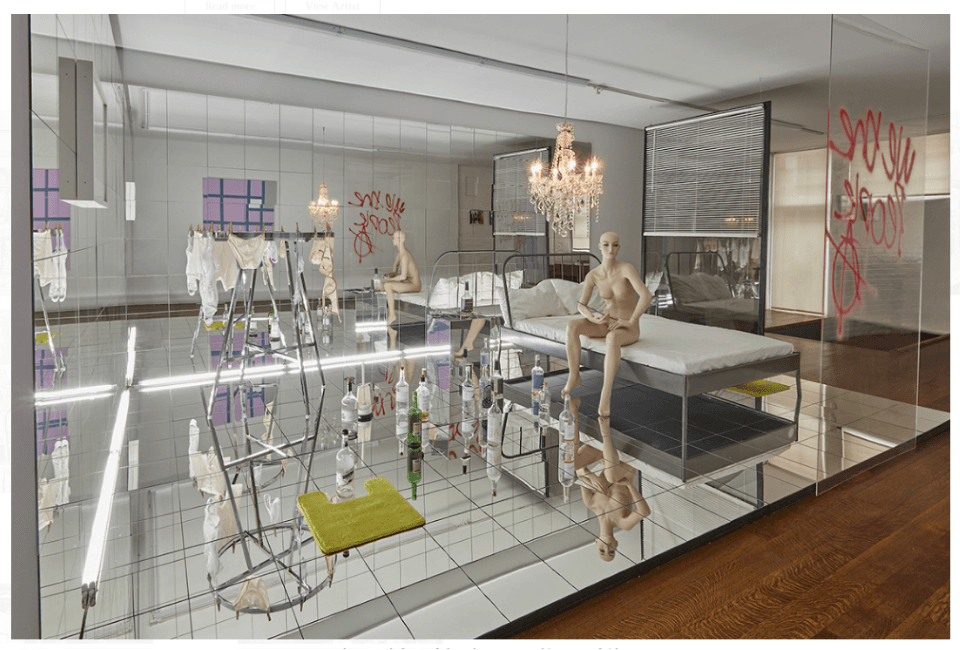
- Scene VI (2019), a mirrored bedroom set with mannequins and props from PELLEA[S], shown at Timothy Taylor in New York in 2019.
- Solo exhibition, Nantes (2019), her first solo show in a French institution, held by the Frac des Pays de la Loire at the HAB Galerie in Nantes and at the Frac in Carquefou, combining 15 years of her work with about 20 works she selected by other artists, mainly women.
Where to see her work
Meckseper's work is in the permanent collections of numerous institutions, including the Solomon R. Guggenheim Museum in New York, and has been shown in international biennials and museum exhibitions. Her galleries in New York, London and Germany stage regular shows.
Questions & answers
Who is Josephine Meckseper?
Josephine Meckseper is a German-born artist, born in 1964 in Lilienthal and based in New York. She studied in Berlin and at CalArts and is known for mirrored shop-window vitrines, films and paintings that mix consumer goods with images of political protest.
What are Josephine Meckseper's vitrines?
They are large glass-and-mirror display cases styled like shop windows, in which everyday mass-produced products are arranged alongside photographs, posters and flags from political events, exposing how consumer culture and politics overlap.
What is Afrikan Spir by Josephine Meckseper?
Afrikan Spir (2011) is a vitrine work named after the 19th-century Russian philosopher Afrikan Spir, whose ideas influenced Nietzsche. It references Hitchcock's The Birds and was shown in the Guggenheim's Storylines exhibition in 2015.
Where can I see Josephine Meckseper's work?
Her work is in the collection of the Solomon R. Guggenheim Museum in New York, among other institutions, and is shown regularly by her galleries and in international exhibitions.