American · Realism · Academic art
Henry Ossawa Tanner
b. 21 June 1859, Pittsburgh, Pennsylvania — d. 25 May 1937, Paris
Henry Ossawa Tanner (1859–1937) was the first African American painter to win international acclaim, known for The Banjo Lesson, The Thankful Poor (1894) and biblical scenes painted in Paris.
1 work in the collection
Works by Henry Ossawa Tanner
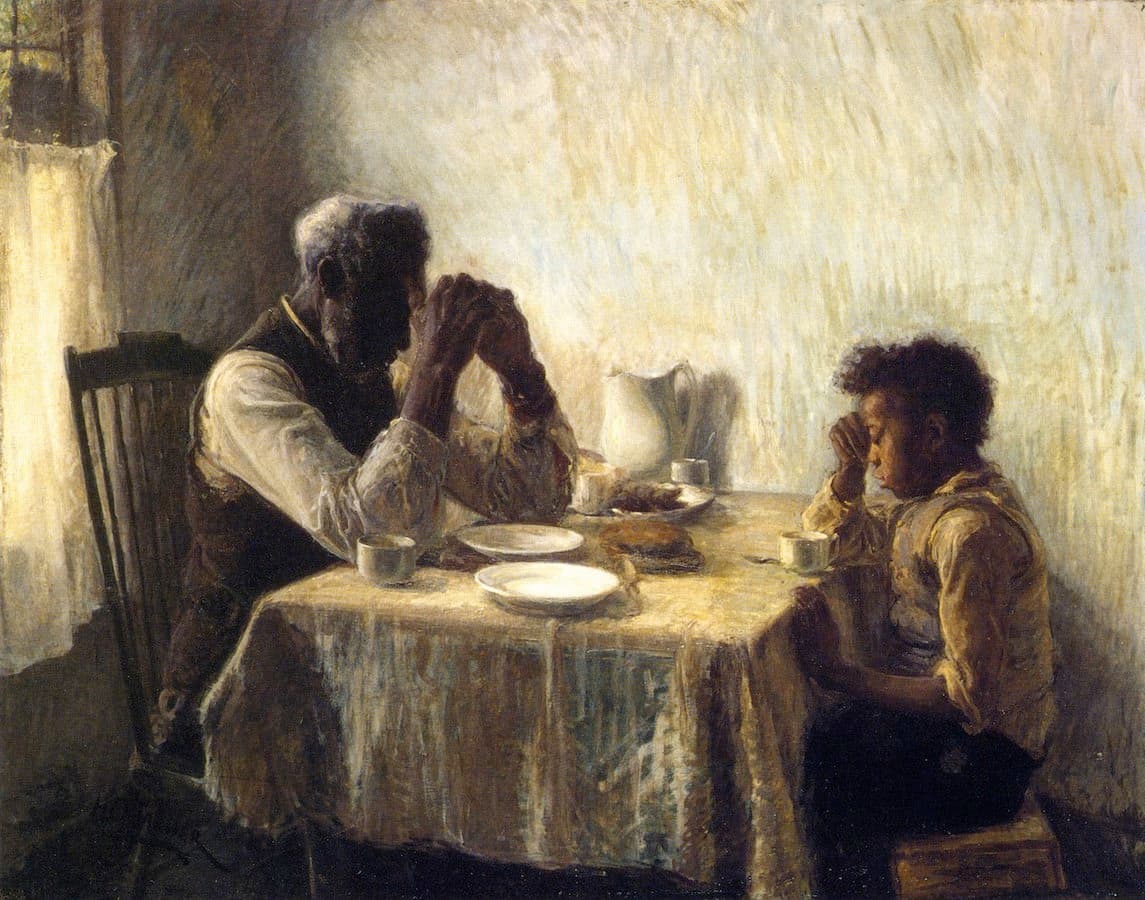
Henry Ossawa Tanner (1859–1937) was an American painter and the first African American artist to achieve international fame. Trained in Philadelphia and based in France from 1891, he painted dignified scenes of Black American life in the 1890s, including The Thankful Poor (1894), before turning to the biblical subjects that made his reputation in Paris.
Life in brief
Tanner was born in Pittsburgh and raised in Philadelphia, the son of Benjamin Tucker Tanner, a bishop of the African Methodist Episcopal Church, and Sarah Miller Tanner, who had escaped slavery. He studied at the Pennsylvania Academy of the Fine Arts under Thomas Eakins, one of the few Black students there. Facing racism in the American art world, he left for Paris in 1891 and studied at the Académie Julian. His Daniel in the Lions' Den was accepted at the Salon of 1896, and his Resurrection of Lazarus (1896) won a medal in 1897 and was bought by the French state; it is now in the Musée d'Orsay. He lived in France for the rest of his life, partly at the artists' colony of Étaples, and was made a Chevalier of the Legion of Honor in 1923.
The Thankful Poor
Painted in 1894 during a stay in the United States, The Thankful Poor shows an elderly man and a boy, probably his grandson, saying grace at a simple table. Light from a window falls across the white cloth and the boy's lowered face. Like The Banjo Lesson (1893, Hampton University Museum), it shows an older generation passing faith and knowledge to a younger one, a deliberate answer to the demeaning caricatures of Black Americans common at the time. It was his last major African American genre painting before he turned to religious subjects.
The painting's history is remarkable: it was found in a storage closet at the Pennsylvania School for the Deaf in 1970, bought by Camille and Bill Cosby in 1981, and acquired in 2020 by Art Bridges, the foundation that lends American art to museums.
Style
Tanner's realism came from Eakins, but his luminous, blue-toned light and soft edges are his own, and in his biblical paintings they create a quiet, interior spirituality.
Where to see his work
The Musée d'Orsay, the Philadelphia Museum of Art (The Annunciation, 1898), the Smithsonian American Art Museum and Hampton University hold major works. See also Academic Art and Famous Paintings.
Questions & answers
Where is The Thankful Poor by Henry Ossawa Tanner?
The Thankful Poor (1894) belongs to Art Bridges, the foundation created by Alice Walton, which acquired it from Camille and Bill Cosby in 2020 and lends it to museums. It had been rediscovered in 1970 at the Pennsylvania School for the Deaf.
What does The Thankful Poor mean?
An elderly man and a boy say grace over a simple meal. Tanner painted it as a dignified image of Black family life, faith and the passing of values between generations, countering the racist stereotypes common in American art and popular imagery of the 1890s.
Why is Henry Ossawa Tanner important?
Tanner was the first African American painter to win international acclaim. His works were accepted at the Paris Salon, his Resurrection of Lazarus was bought by the French state in 1897, and his career opened doors for later Black American artists.